This page provides a full record of our weekly updates regarding search ranking and online visibility.
Use these professional insights to stay informed about current SEO trends
and technical changes for businesses in Chennai, India and global markets.

 Link Copied!
Published on: 10 September 2026
Google updated its aggregator unit documentation on 8 September 2026, and the guidance on imagery is unusually specific: clear, original photography, categories that say boutique hotel rather than hotel, detailed descriptions, verified ratings with review counts, and pricing and availability kept current. Two limits matter before anyone acts on it. The unit appears only to users in the European Economic Area, on hotel, flight, ground transport and product queries, and the guidance is addressed to approved vertical search services supplying Google with structured feeds. Google's companion page on supplier units, covering individual hotels, shops and service providers, says direct providers need no data beyond what is already crawlable. This is documentation about presentation inside one regional feature,
not a ranking signal.
The list is useful outside the EEA too, because it shows what Google treats as a well-described business. Imagery is one of the first areas worth reviewing: stock photos and file paths that change with every redesign can weaken consistency. That is why consistent image URLs matter more than owners expect. The descriptive side needs the same attention. Structured data states the attributes a page only implies, and a local SEO audit catches the categories, hours and contact details that drift out of date. The same business information can matter across regional Search features, local results and AI-generated answers. It comes from what you publish about yourself.
 Link Copied!
Published on: 3rd September 2026
Google's site reputation policy applies to third-party pages published on a host site when those pages are primarily there to benefit from the ranking signals the host has earned through its own content. Hosting third-party content is not automatically a problem. Google's spam policy documentation leaves arrangements such as syndicated wire copy, forum posts and clearly labelled advertorials outside this policy. However, the first-party involvement exception was removed in November 2024, meaning editorial oversight alone is no longer a defence. From 30 August 2026, following a European Commission mandate, manual actions under the policy no longer affect search results shown to users in the European Economic Area. Enforcement elsewhere
remains unchanged.
For a sponsored subfolder, partner hub or white-label arrangement, the key question is whether the page would still belong on your domain if the domain had no existing ranking history. Affiliate links should be properly marked, and hosted sections should meet the same editorial standards as your own content. Since these arrangements are often handled by sales or partnership teams, they can surface during a website and visibility audit rather than routine reporting. The ranking signals a partner wants to benefit from are the same signals your content has built over time, so it is worth understanding how domain authority accumulates and how brand authority and E-E-A-T contribute to your site's credibility. If nobody on your team would confidently defend a hosted page to a reader, it probably should not be on your domain.
 Link Copied!
Published on: 27th August 2026
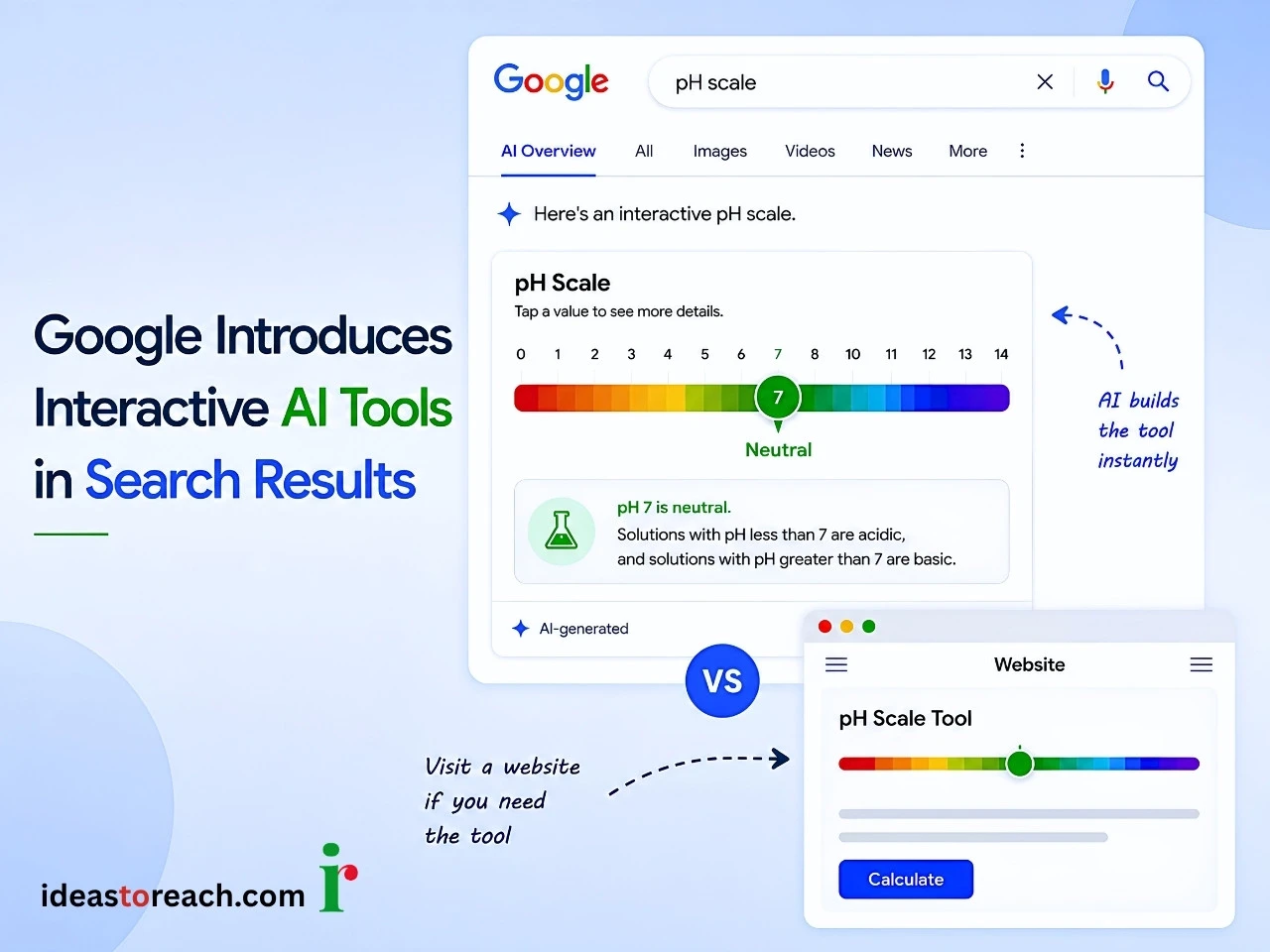
Google is now letting its AI, in AI Overviews and AI Mode, build small, ready-made tools right inside the search results page, like a calculator or an interactive chart, instead of just showing text answers or links to websites. For instance, if you search for "pH scale," you might see an interactive visualization
right in the results.
In Google's own tests, people often preferred these AI-generated tools over clicking through to a real website that offered the same tool. Participants preferred the generated interface over the top search result in 90% of comparisons on the
main set of prompts.
The core idea: Google's search AI can now build small working tools on the spot, right on the results page, instead of just linking to a website that has that tool.
What's "safe" vs "at risk":
At risk: If your website's value is just a basic calculator, converter, or similar tool that runs on public formulas (like a simple EMI calculator or a unit converter), Google's AI can now recreate that same thing itself. So someone searching for it may never click to your site, they get the answer directly in Google's results.
Safer: If your content or tool depends on something Google can't easily copy, like your own client data, your specific pricing, your local market knowledge, your original research, or your professional expertise and opinions, Google's AI has nothing to copy from. It can't fake your unique data or your voice.
 Link Copied!
Published on: 20th August 2026
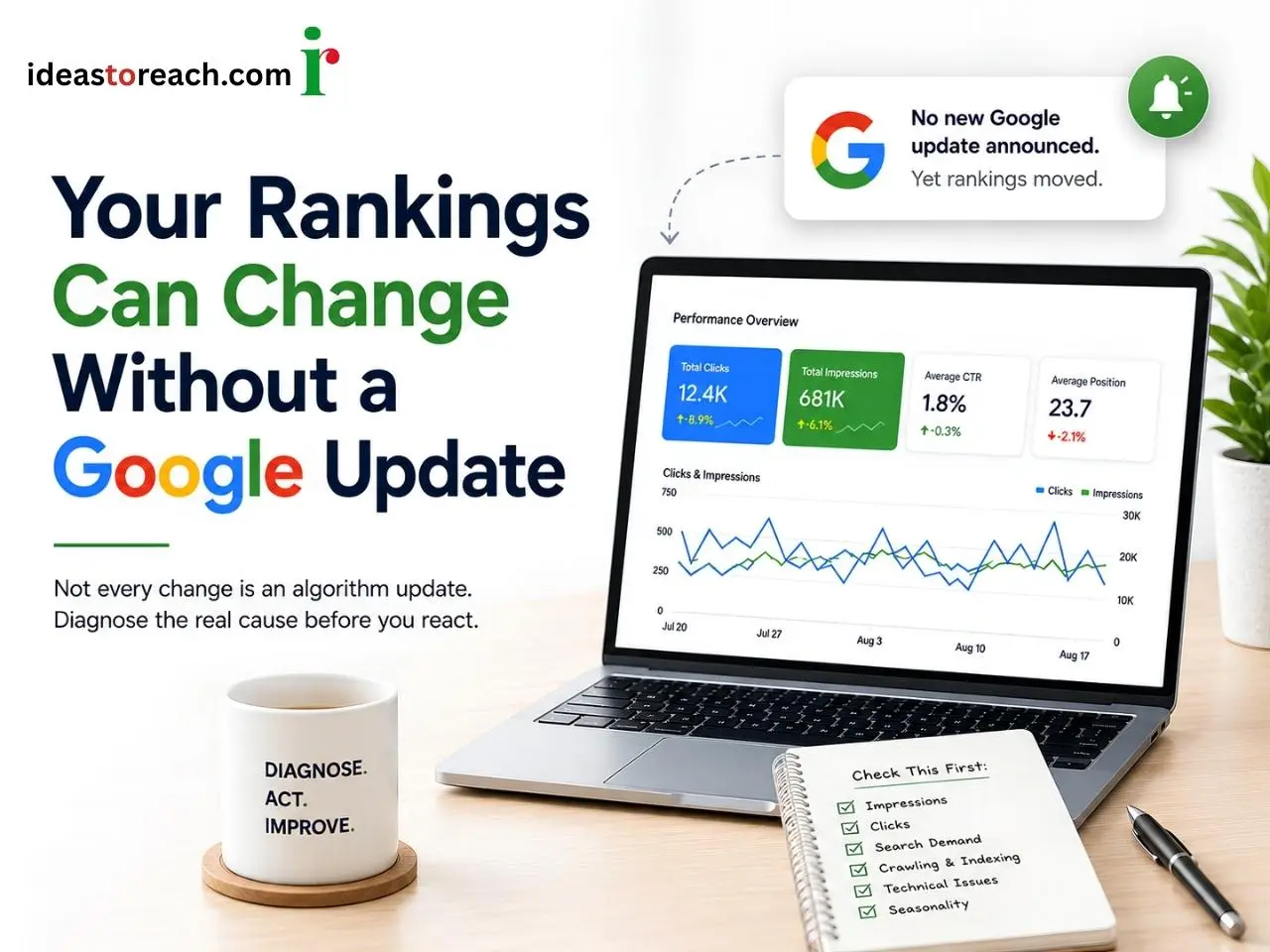
Rankings can move even when Google has not announced an update. Google explains that smaller updates may go unannounced because they are not widely noticeable, unlike the core updates it confirms publicly. Plenty of movement has nothing to do with an algorithm at all: Google's guidance on debugging Search traffic drops names seasonality and shifting user interest, technical errors that stop pages being crawled or indexed, site moves, and security or spam problems as distinct causes. Google also describes its results as dynamic because the open web keeps changing with new and updated content. A ranking position is a comparison against everything else eligible for that query, so it moves when the other side of the comparison moves.
An organic traffic drop calls for diagnosis first. Check whether impressions fell alongside clicks, and whether the affected queries lost demand generally. A properly configured Search Console setup can help identify which of those changes occurred. Rankings and traffic are separate measurements, and a fall in one does not establish a fall in the other. A broken canonical, a seasonal dip and an algorithmic shift each need a different response, so work out which one you have before rewriting a page. Teams that log what changed on their own site each week reach an answer faster than teams that go looking for an update to blame.
 Link Copied!
Published on: 13th August 2026
Genuine reviews shape how buyers choose and Google has now added specific guidelines for how review content should be represented in search features. On 24 July 2026, Google updated its review snippet documentation with a new guideline telling site owners not to include fake or undisclosed incentivized reviews on the page or in structured data markup. Two examples include reviews that are not based on a genuine experience of the product or service and reviews written in exchange for money, discounts, vouchers or free products where that incentive is not clearly and prominently disclosed. The addition sits inside Google's review snippet guidelines the section that sets Google's guidelines for
review-related rich results.
Rankings, rich results and customer trust are three different things. When structured data guidelines are violated, Google may take a manual action that causes the review markup to be ignored, while the page itself can still appear in Search. So reviews are not an SEO shortcut. Collect genuine customer feedback, disclose any incentive clearly and prominently, then check that the structured data on the page matches what a visitor can actually see. Businesses that maintain honest reviews and testimonials over years build the kind of brand authority that can outlast any
single search feature.
 Link Copied!
Published on: 06th August 2026
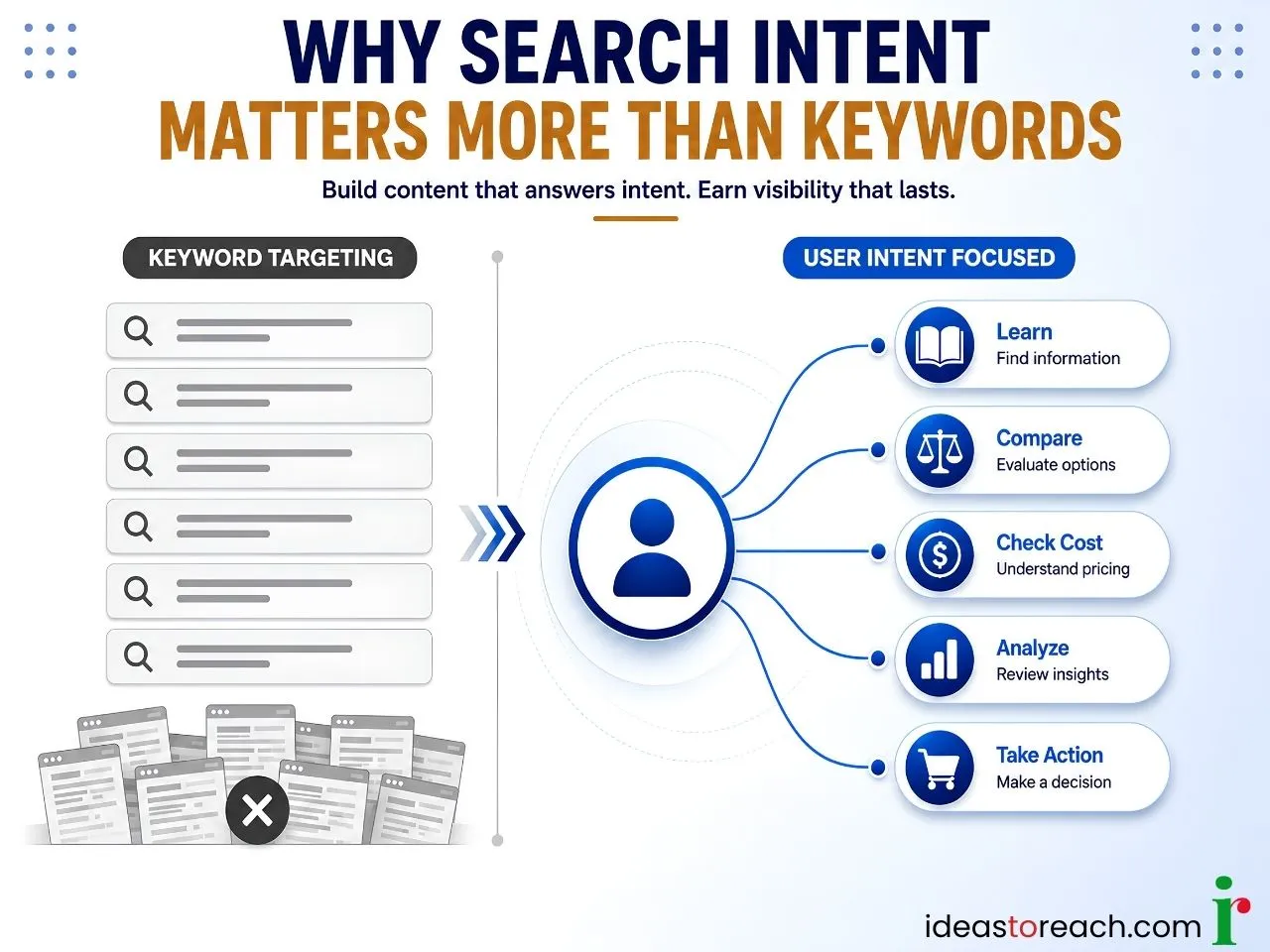
Keyword targeting has always been a way of understanding what users are looking for. Search queries provide signals about a person's intent and today's search systems interpret those signals far beyond exact keyword matching. Google's guidance on generative AI features explains that creating separate pages for every long-tail keyword variation is unnecessary because its systems already understand synonyms and broader meaning. It also warns that publishing multiple pages targeting the same intent can be considered a spam practice rather than an effective SEO strategy. Search visibility therefore depends increasingly on how effectively a page satisfies a user's need rather than how many keyword variations it contains.
Planning content around user intent creates a stronger website than planning around keywords alone. Every page should have a clear purpose, whether it is to inform, compare or help users make a decision. A well-defined User Intent SEO Strategy ensures content is built around the questions users are trying to answer while avoiding the common problem of Keyword Cannibalization, where multiple pages compete for the same search intent. Advanced SEO Solutions help identify gaps in existing content and improve coverage where it matters most, creating a more organised website that serves users more effectively while strengthening
long-term search visibility.
 Link Copied!
Published on: 30th July 2026
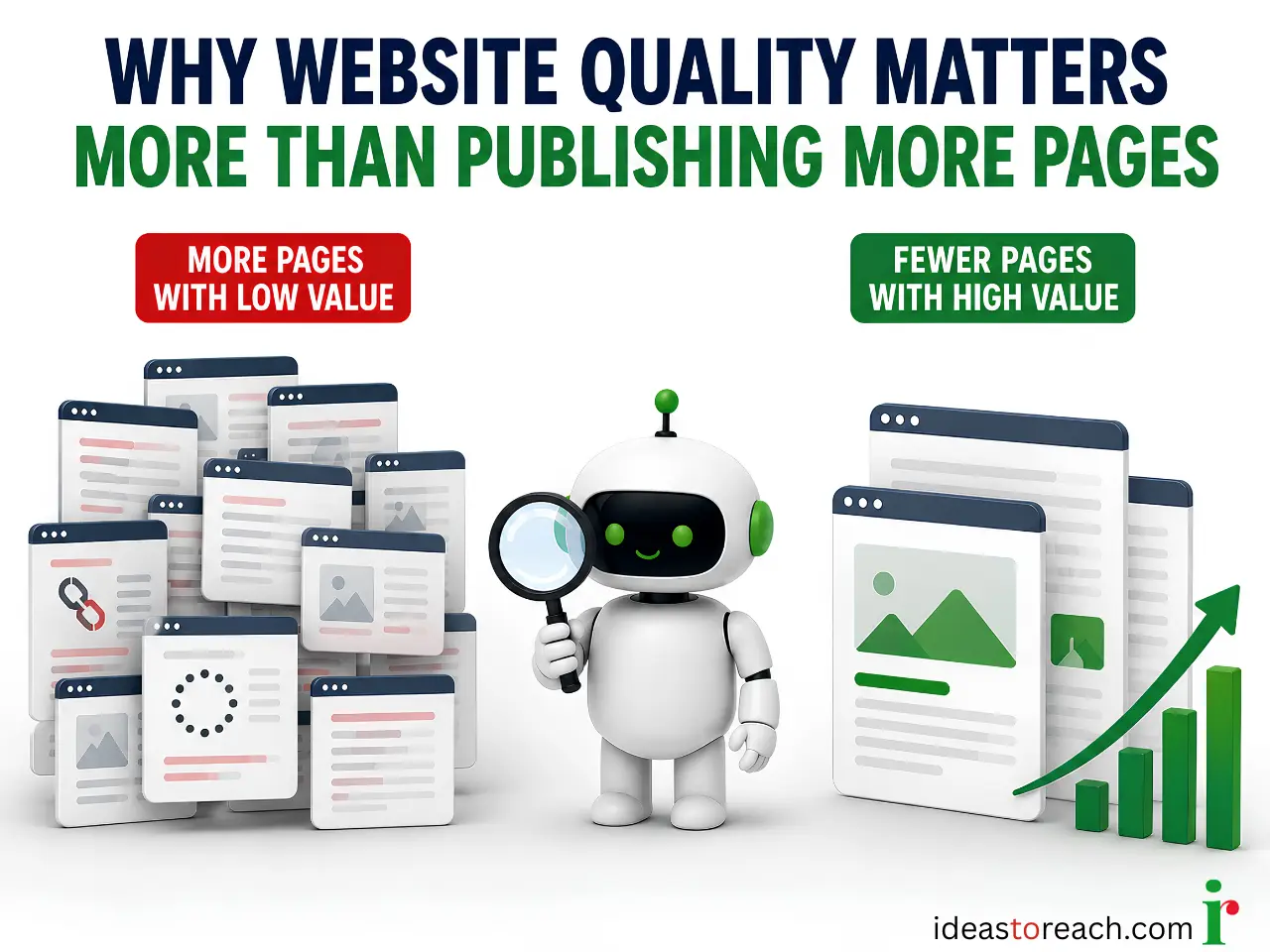
Publishing more pages does not automatically improve search visibility. Search engines evaluate the overall quality of a website, not just the number of pages it contains. Content that is useful, original and relevant is more likely to be crawled, indexed and shown in search results than large volumes of thin or repetitive pages. Google's Creating Helpful, Reliable, People-First Content guidance reinforces that long-term search visibility depends on delivering content that genuinely helps users.
Building a high-quality website goes beyond creating good content. Clear site structure, strong internal linking, accurate structured data and regular content reviews all help search engines understand which pages deserve attention. Focusing on improving existing pages, removing outdated content and maintaining a consistent user experience often delivers better results than publishing new pages without a clear purpose. Learn more about our Website & SEO Audits, Internal Linking Strategy and Google Structured Data services to build a stronger foundation for long-term search visibility.
 Link Copied!
Published on: 23rd July 2026
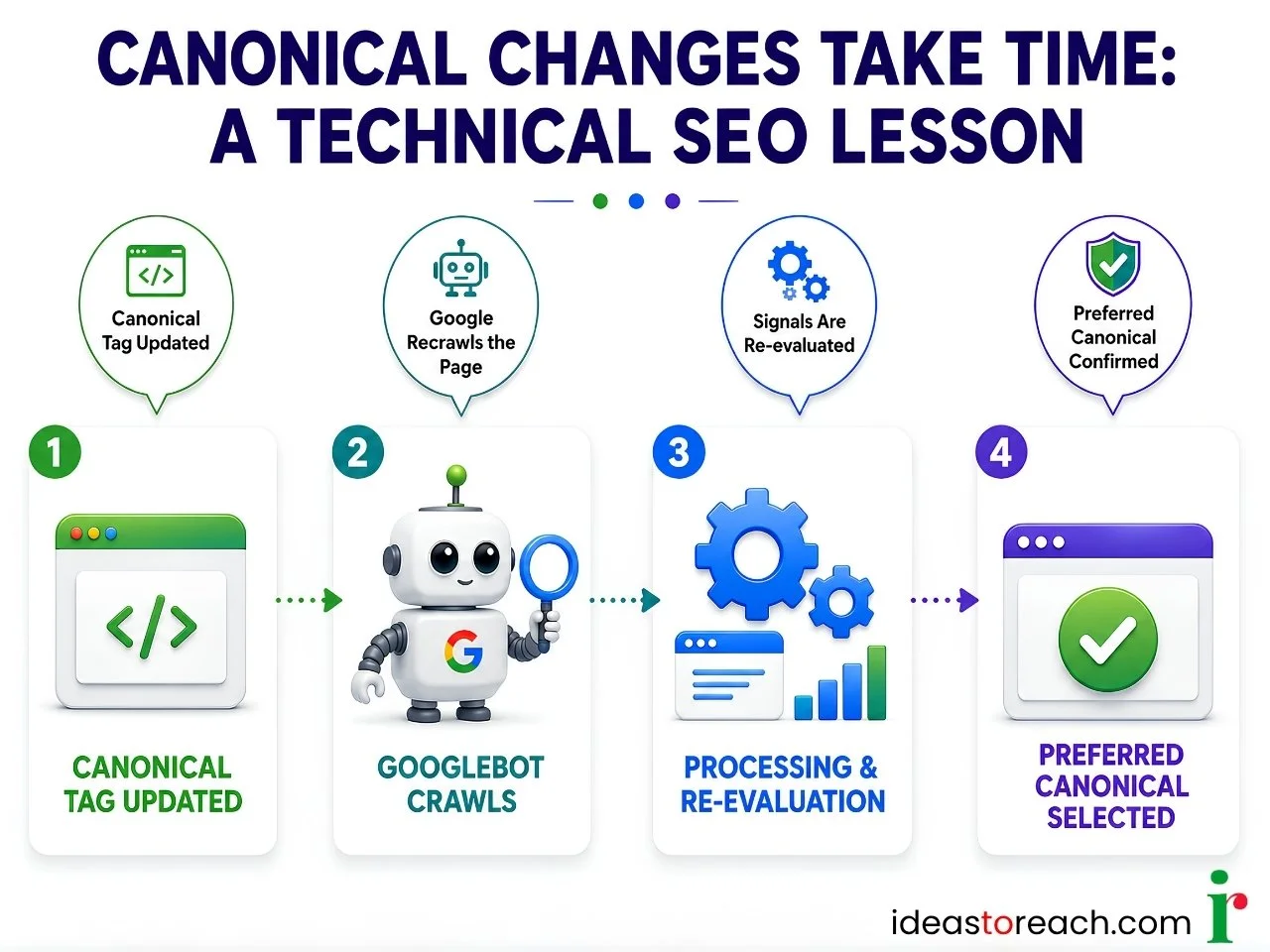
Technical SEO improvements are often expected to produce immediate results, but Google has clarified that canonicalization changes take time to be re-evaluated after implementation. Updating a canonical tag is only one step in the process. Google must first recrawl the affected pages, process the updated signals and determine whether the preferred canonical should change before those updates are reflected in Search. This means that measuring success immediately after making technical changes can lead to incorrect conclusions. Google's latest clarification highlights the importance of allowing search systems enough time to process these changes before assessing their impact. Learn more in Google's official documentation on the latest Search documentation updates.
Patience, however, should never replace proper implementation. Canonical tags work best when they support a well-structured website with clear content relationships and consistent technical signals. Combining a solid Internal Linking Strategy with regular Website and Online Visibility Audits helps search engines understand which pages should be prioritised while identifying technical issues that may affect crawling or indexing. When these foundations are in place, technical improvements become more effective over time, giving search engines greater confidence when processing changes.
 Link Copied!
Published on: 16th July 2026
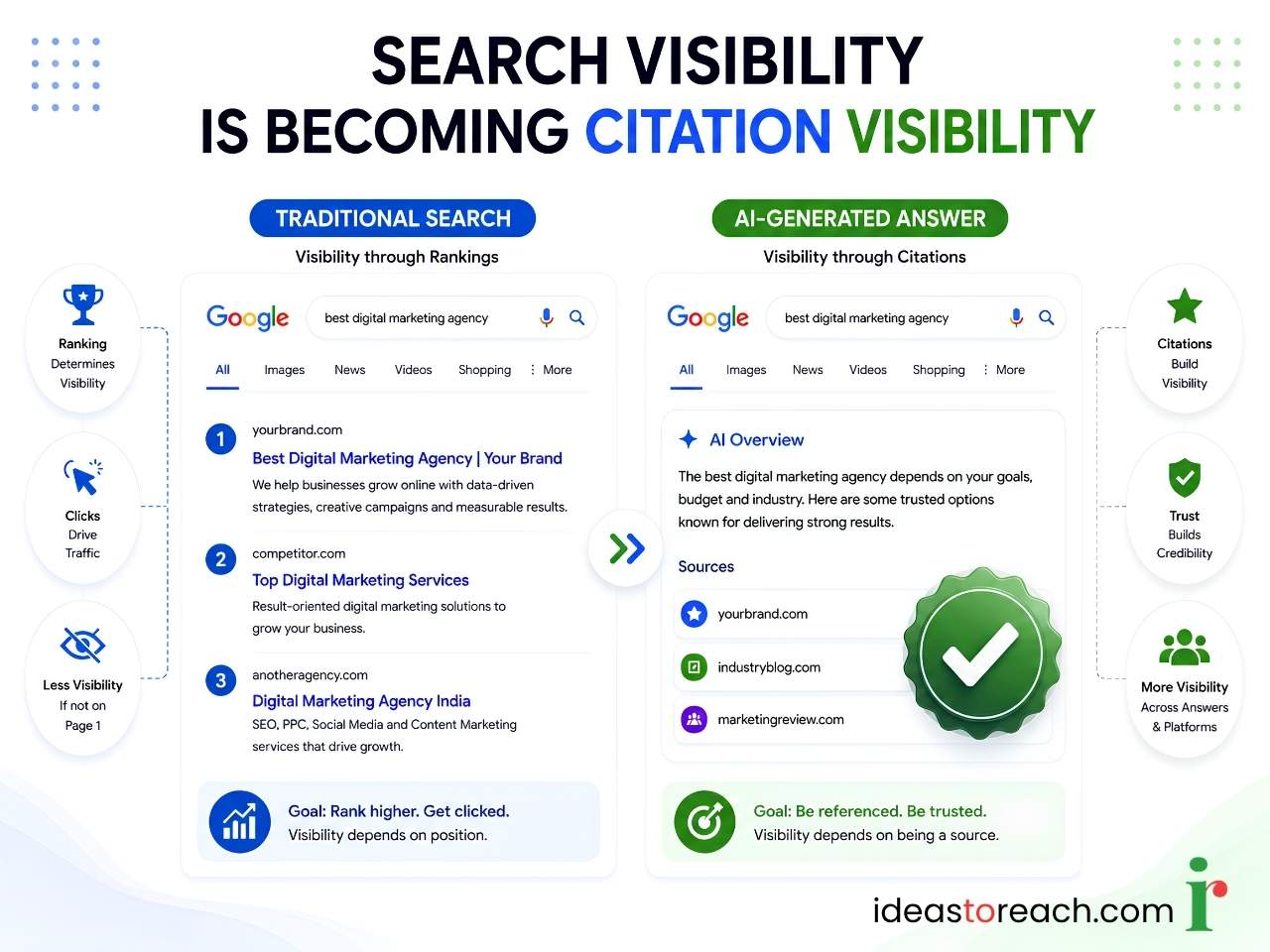
Search visibility has traditionally been measured through rankings, clicks and traffic, and those signals remain just as important today. However, newer search experiences are introducing another layer of visibility by assembling responses from multiple sources rather than simply presenting a list of links. This means that while ranking well continues to determine whether your content is found and visited, being referenced within generated responses can provide an additional opportunity to appear in front of users. Visibility is no longer limited to where a page ranks, but also includes whether its information contributes to the
answers people receive.
Building this type of visibility does not require abandoning traditional SEO principles. Clear topic coverage, consistent entity descriptions and strong relationships between related pages make content easier to understand and reference when relevant. Supporting this with Google Structured Data, a thoughtful Internal Linking Strategy and strong Domain Authority Foundations & Concepts creates a website that performs well in traditional search while also improving its chances of appearing within generated responses and summaries. The strongest websites are unlikely to choose between rankings and citations, but instead build the foundations required for both.
 Link Copied!
Published on: 09th July 2026
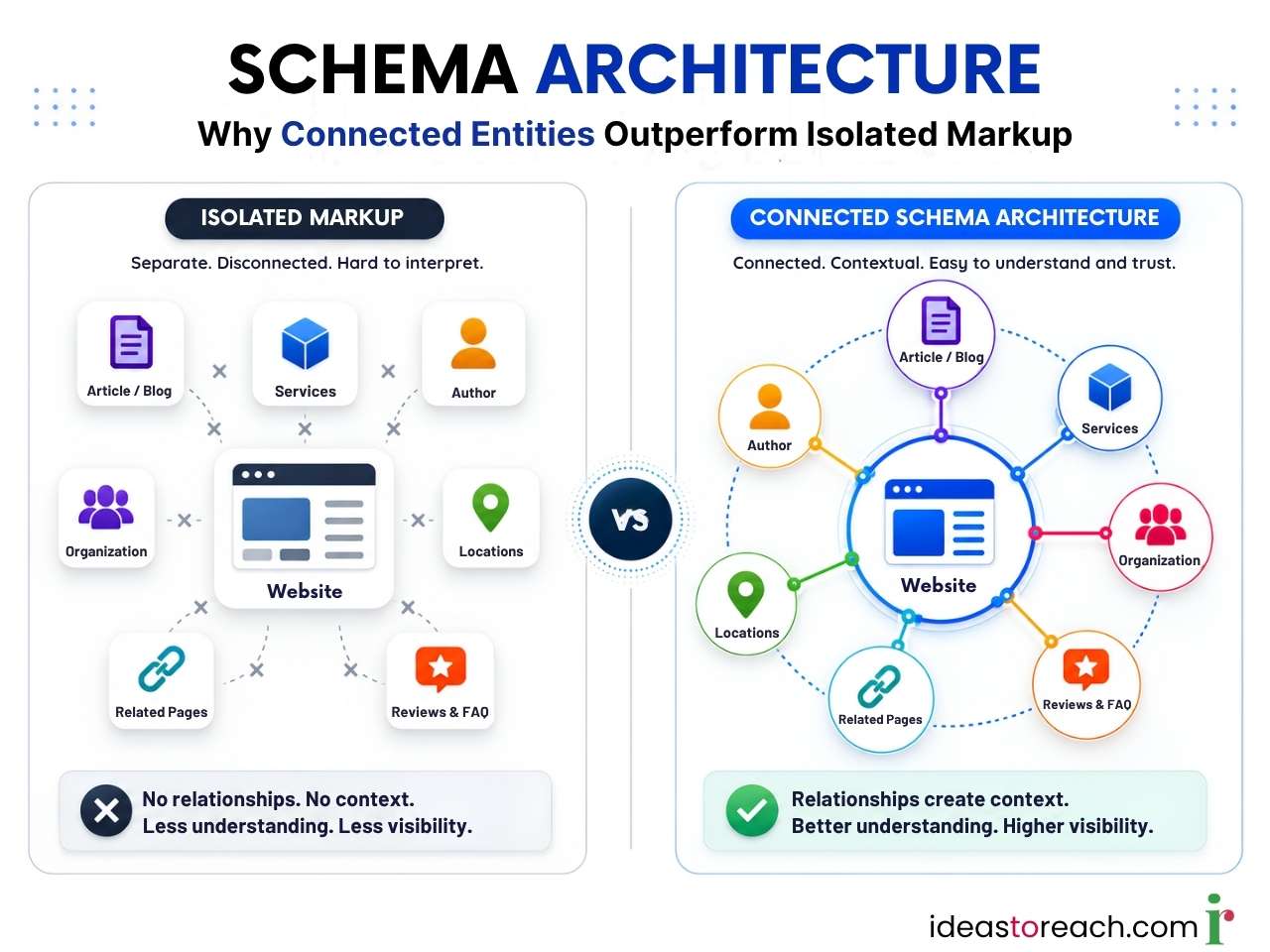
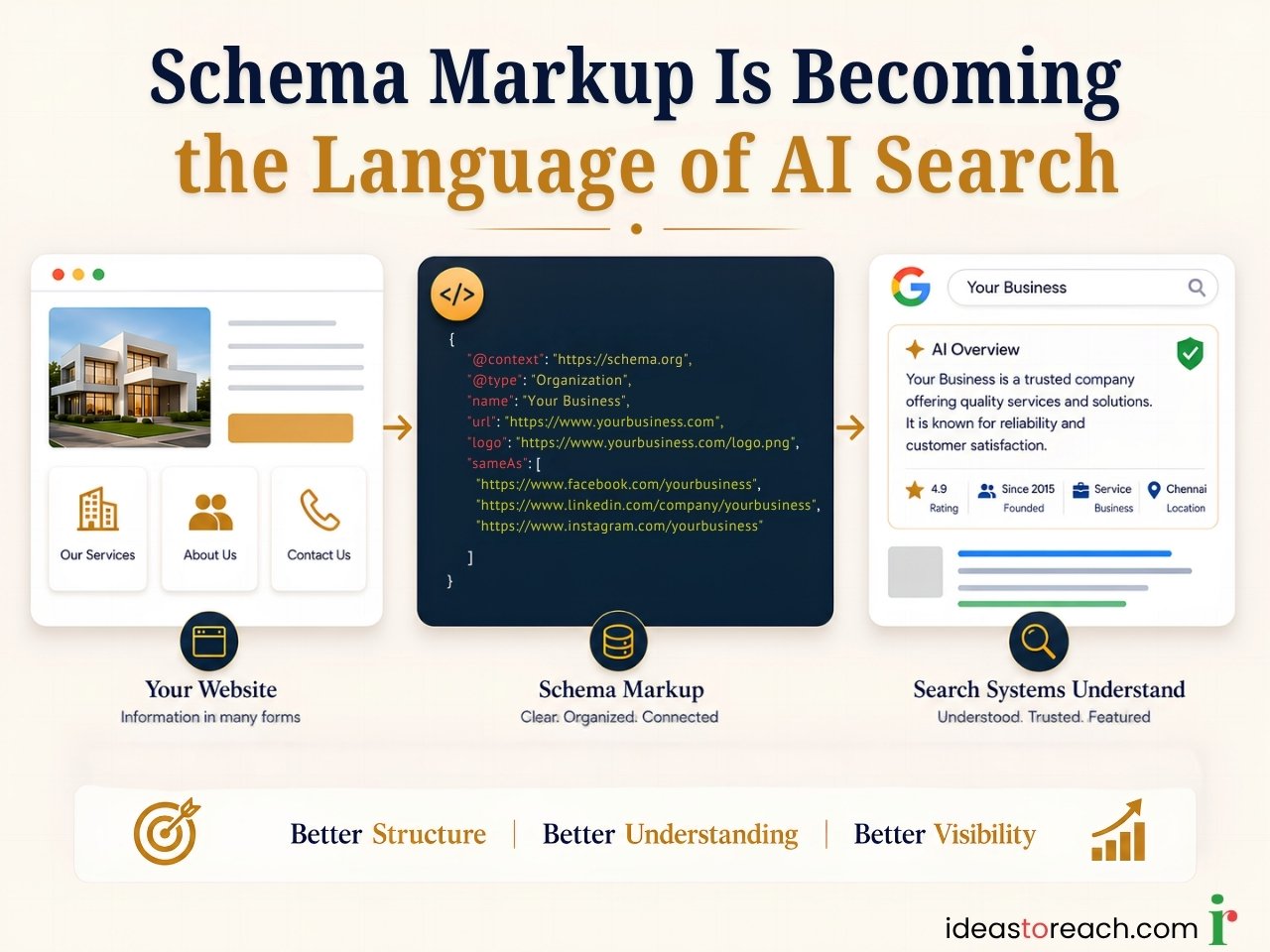
Many websites now include structured data, but the real value lies in how that information is organised across the entire website. Individual schema types placed on separate pages provide useful signals, yet they often fail to show how different parts of a business connect with one another.
A well-structured schema architecture links organisations, services, articles, authors and locations into a unified framework, allowing search systems to understand each as part of an organised website rather than a collection of unrelated documents. As websites expand, these connections provide stronger context and a clearer understanding than isolated markup implemented without a defined structure.
Building these connections begins with understanding how your existing content relates across the website before introducing additional structured data. Google Structured Data ensures every entity is described consistently, while a clear Internal Linking Strategy strengthens the relationships between key pages. Extending those relationships through SEO as Core Business Architecture, supported by Advanced Link Building & DA Strategies and Domain Authority Foundations & Concepts , creates a stronger and more connected website structure that is easier to interpret and organise. This connected approach establishes a solid foundation for long-term
search visibility.
 Link Copied!
Published on: 02nd July 2026
For many years, Schema Markup was mainly linked to rich results such as reviews, FAQs and business information. That is only a small part of its purpose today. Search systems use structured data to understand who a business is, what each page is about and how different pages connect across a website. This helps them identify services, articles, authors and organisations with better accuracy. Even when no rich result appears, Schema Markup provides important information that helps search systems organise content correctly and understand the meaning behind a website. Search systems now look beyond keywords to understand what a website is really about. This makes well structured data an important part of long term search visibility.
Building a website that search systems can understand starts with a proper Website and Online Visibility Audit to identify missing or incomplete structured data. From there, an advanced SEO strategy should ensure every important page uses the right schema while working alongside a clear Internal Linking Strategy that connects related content across the website. Supporting this with accurate Google Structured Data and a strong Domain Authority Foundation helps build trust and consistency across every page. When these elements work together, they create a website that is easier to understand, easier to organise and better prepared for the future of search.
 Link Copied!
Published on: 25th June 2026
Search engines in June 2026 are shifting their evaluation criteria well beyond published content and keyword placement. Both developments this week come directly from Google. Neither of them is about content. Google confirmed this week that one specific server-side security setting directly affects search rankings. because without it, external websites can pull your content into their own pages and rank with it instead of you. At the same time, Google's Preferred Sources feature has expanded globally, introducing a personalised layer where users actively select the publishers they want to see more of across search results. This means websites without an established reader base now face a genuine visibility gap before they even enter a user's consideration set. Technical protection and earned reader preference now function as baseline credibility requirements rather than optional upgrades.
For businesses looking to compete under these conditions, addressing the technical layer first is essential. A thorough Website and Online Visibility Audit will surface whether your site's server level configurations are exposing it to content theft or weakening its structural credibility with crawlers. Building the kind of trust that converts casual visitors into loyal readers requires consistent topical depth which is best built through Advanced SEO Solutions focused on content depth and clarity. Earning mentions and references from external websites through ethical Link Building remains a reliable method of reaching audiences before they have the opportunity to mark you as a preferred source. The Domain Authority Foundations & Concepts resource provides a clear framework for understanding how credibility builds over time and connects technical health to long-term ranking durability. The Advanced Link Building & DA Strategies guide takes this further by covering practical methods for earning recognition across external platforms.
 Link Copied!
Published On: 11th June 2026
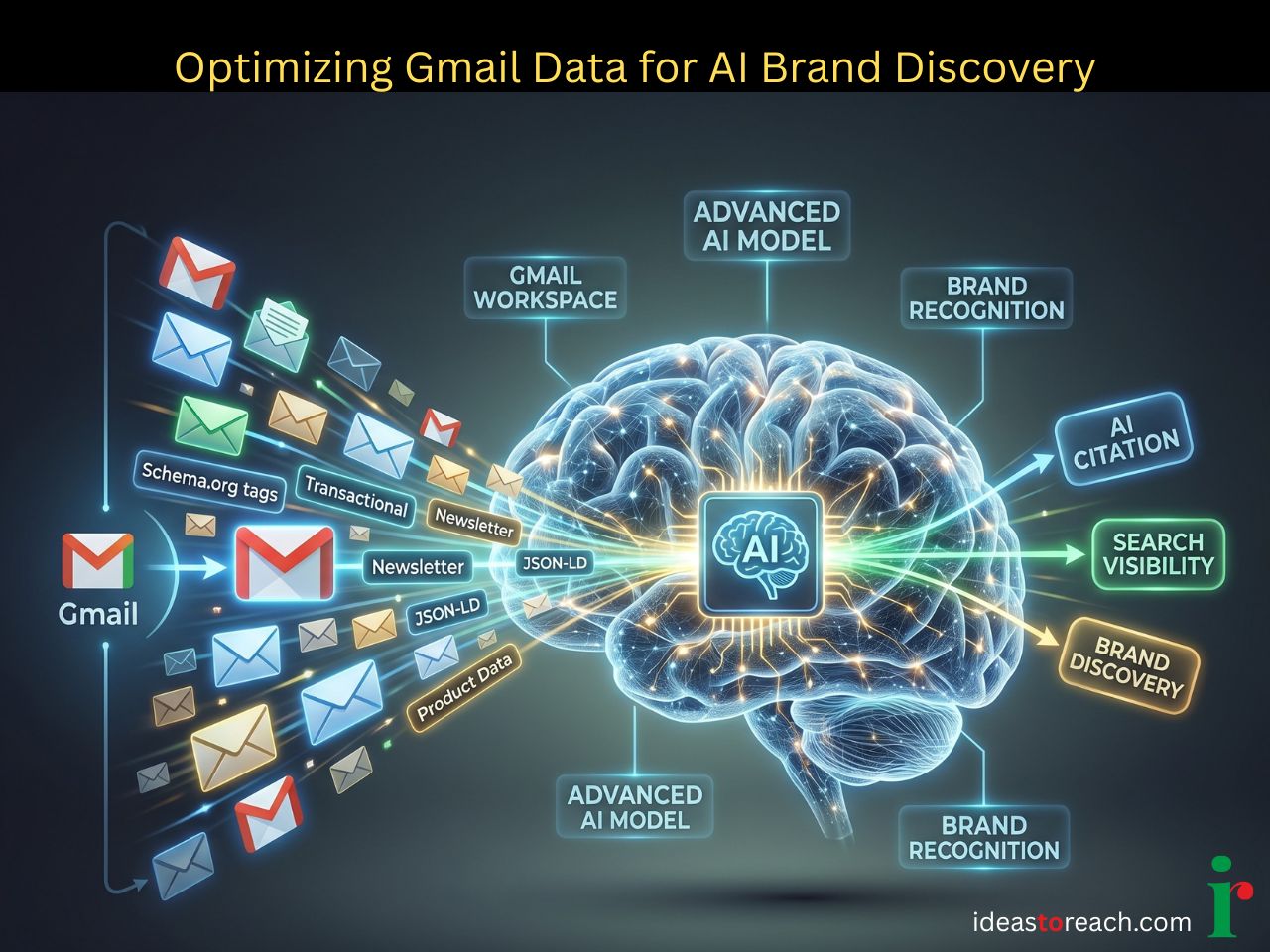
Google and other search networks are expanding how they extract brand data, moving far beyond standard website indexing into conversational workspace ecosystems. Recent ecosystem shifts reveal that structured, clear data within transactional emails, newsletters, and system notifications plays a vital role in how AI models recognize corporate entities. For modern businesses, this means your email infrastructure directly feeds into your broader digital authority footprint. Neglecting this side of your messaging creates a serious visibility gap, whereas applying a strategic framework for Gmail optimization for AI brand visibility ensures your enterprise is accurately cited by conversational search systems.
To align with these advanced algorithmic behaviors, digital visibility must be viewed as an integrated ecosystem rather than separate channels. Implementing bespoke organic growth plans now requires clear schema validation across all customer touchpoints, ensuring corporate communications mirror web architectures. Initiating a rigorous technical visibility evaluation allows brands to uncover hidden structural flaws that block automated systems from mapping entity authority. By supporting these setups with a clear internal linking strategy and robust Google structured data, you secure a highly resilient presence as discovery models mature.
 Link Copied!
Published On: 05th June 2026
The search landscape in June 2026 continues to shift rapidly toward generative summaries and direct answers. As conversational interfaces become the default method for information discovery, traditional keyword tracking is being replaced by AI visibility metrics. Search engines are prioritizing content that explicitly answers complex, multi-layered queries and provides structured validation that machines can easily interpret. For businesses looking to capture this highly contextual traffic, securing a spot in AI-generated overviews requires moving away from thin, isolated articles toward deeply integrated, authoritative resource hubs.
To adapt to these evolving algorithmic models, digital marketing strategies must prioritize structural clarity and topical depth. Initiating a technical visibility evaluation is a crucial first step to identifying where your current assets might be falling short of these modern technical standards. Implementing bespoke organic growth plans now relies on building robust content hubs and topic clusters that naturally map out user journeys. When these information hubs are supported by a deliberate internal linking strategy and validated with precise Google structured data it ensures your brand's authority is accurately understood and cited across the modern digital ecosystem.
 Link Copied!
Published On: 28th May 2026
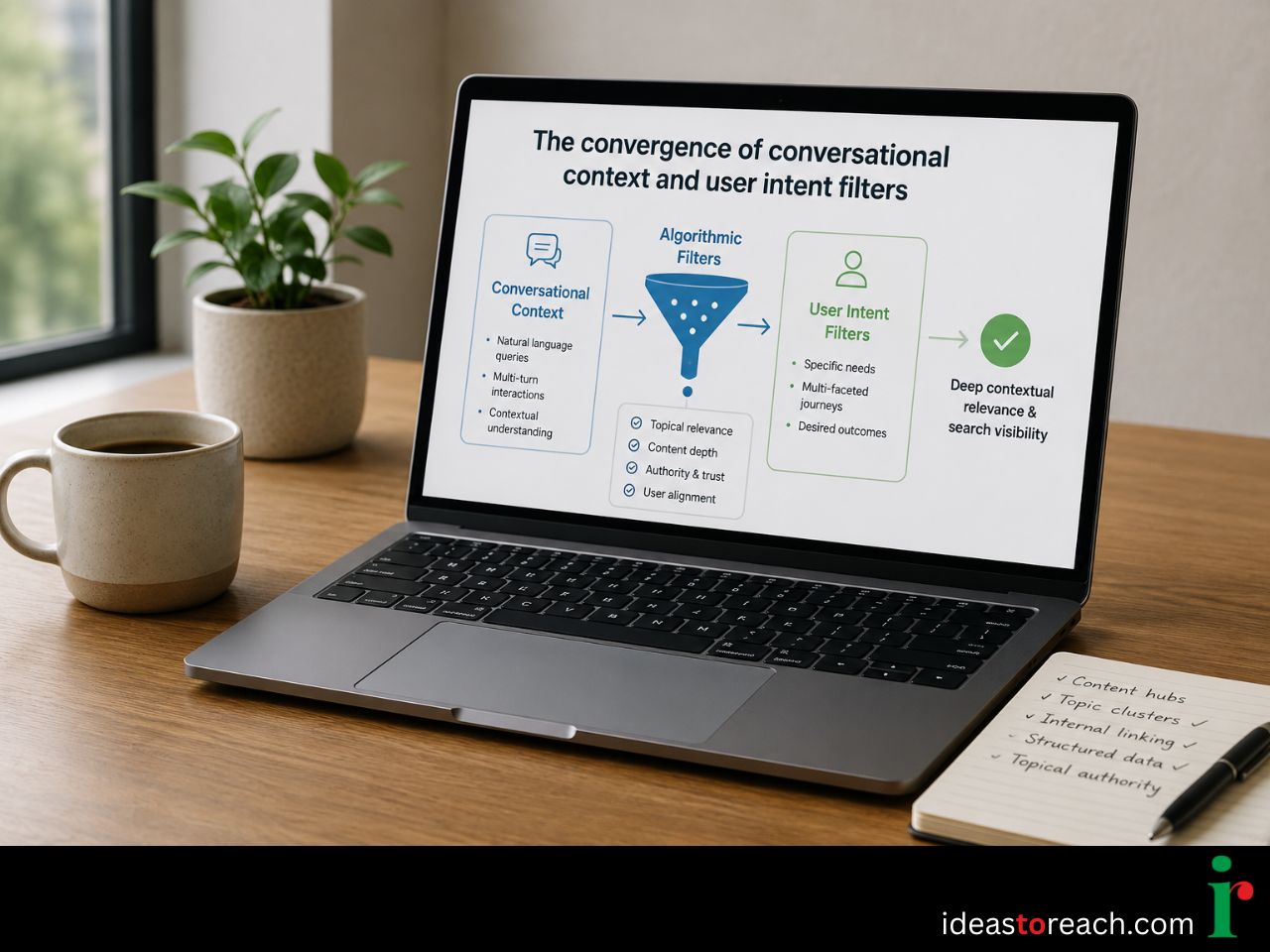
Search engines are increasingly filtering out surface-level content in favor of deep contextual relevance and explicit user alignment. Recent ecosystem shifts demonstrate that platforms are prioritizing comprehensive resources that answer specific, multifaceted user journeys over traditional keyword-stuffed landing pages. For modern businesses, this means search visibility is no longer a matter of simple keyword tracking, but about establishing undeniable topical authority. To accurately evaluate how well your current content library meets these stringent algorithmic criteria, performing a structured website and online visibility audit is a vital foundational step.
Thriving under these updated evaluation frameworks requires brands to build connected knowledge hubs rather than isolated articles. To capture traffic that satisfies highly specific consumer needs, businesses must deploy advanced SEO solutions that bridge the gap between technical infrastructure and editorial depth. Organizing your data into clear content hubs and topic clusters and tying them together through a robust internal linking strategy signals structural expertise to both users and crawling engines. Validating these architectures with accurate Google structured data ensures your brand remains highly competitive as algorithmic discovery models continue to mature.
 Link Copied!
Published On: 21st May 2026
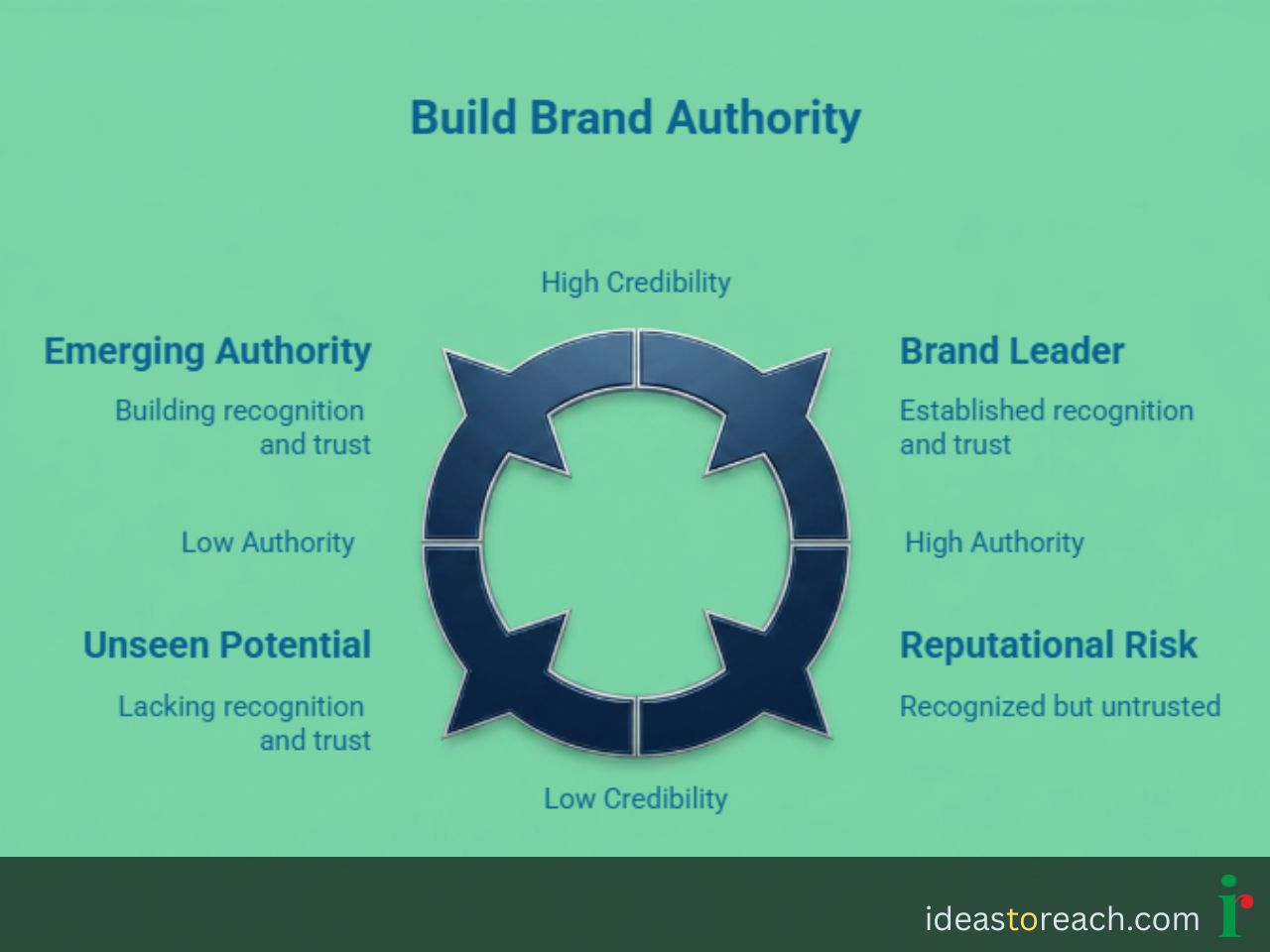
Google officially finalized the deprecation of FAQ rich results, changing how websites secure organic real estate on search engine result pages. Moving forward, expandable Q&A schema will no longer display in traditional search results, signaling a massive push toward structural cleanup. However, this shift does not mean FAQ content has lost its value. Instead, this data has evolved directly into an engine for AI citation readiness, where structured data is used by conversational models to quote your pages as primary references. To ensure your assets are fully optimized for this transition, establishing a clear framework through a comprehensive website and online visibility audit is a critical step.
Compounding these SERP modifications, recent May 2026 data indicates a substantial surge in visibility for brands actively referenced within AI Overviews and AI Mode. Content that effectively demonstrates authentic expertise and human-led insights is experiencing up to an eighty percent lift in click-through rates when cited by these models. To safeguard your rankings against automated filter shifts, deployment of advanced SEO solutions that anchor your unique brand authority is vital. Transitioning your architecture toward specialized topic clusters, implementing explicit Google structured data, and executing an internal linking strategy remain the most definitive methods to command visibility across the contemporary digital ecosystem.
 Link Copied!
Published On: 14th May 2026
Search behavior in May 2026 has shifted fundamentally from a link-led to an answer-led experience. Google and other major platforms are now prioritizing direct synthesis over traditional search result pages, which means visibility is no longer defined strictly by organic ranking positions. For businesses, this means content must be optimized not just for keywords, but for AI systems to cite your pages as credible sources in their generated summaries. We recommend conducting a website and online visibility audit to ensure your current assets are built to be "cited" and aren't being pushed down due to generic or low-signal information.
The recent May 2026 developments place a heavier emphasis on brand authority and external validation-such as ethical link building and domain authority. - as key ranking signals. Google is increasingly rewarding websites that provide unique, human-led perspectives and structured data to explicitly define their expertise. To stay competitive, it is essential to implement advanced SEO solutions that focus on user intent and entity clarity. By moving away from mass-produced content toward genuine expertise, you can maintain visibility even as zero-click search impacts traditional traffic patterns.
 Link Copied!
Published On: 07th May 2026
Search behavior in May 2026 has officially transitioned from a link-led to an answer-led experience. Google and other major platforms are now prioritizing direct synthesis over traditional search result pages, which means visibility is no longer defined strictly by organic ranking positions. For businesses, this means that content must be optimized not just for keywords, but for AI systems to cite your pages as credible sources in their generated summaries. We recommend focusing on a website and online visibility audit to ensure your current assets are built to be cited and aren't being pushed down due to thin or generic information.
The recent May 2026 algorithm updates place a heavier emphasis on brand voice and topical authority as key ranking signals. Google is rewarding websites that provide unique, human-led perspectives that distinguish them from generic AI noise. To stay competitive, it is essential to implement advanced SEO solutions such as structured data to explicitly define your brand's architecture to search engines. By building out content hubs and topic clusters, you can demonstrate the expertise and depth required to maintain visibility in this increasingly fragmented search ecosystem.
 Link Copied!
Published On: 29th April 2026
Search engines are shifting toward a model where AI provides direct answers for local business queries rather than just listing links. For companies in Chennai and throughout India, this change requires a focus on precise information that machines can easily categorize. If your data is outdated or lacks detail, your business will likely lose visibility in these real-time search results. Conducting a regular website and online visibility audit is essential to ensure your content meets these new technical requirements.
To maintain a strong presence, businesses must adopt advanced SEO solutions that go beyond standard keyword placement. Utilizing structured data helps search models understand the specific context of your services, making your brand more likely to appear in AI summaries. Staying informed about generative engine optimization in India for 2026 will help you adapt to these changes as they happen. Consistent updates and technical precision are the most effective ways to ensure your ranking remains competitive in this evolving digital environment.