Written by : Viswanathan Ganesan 
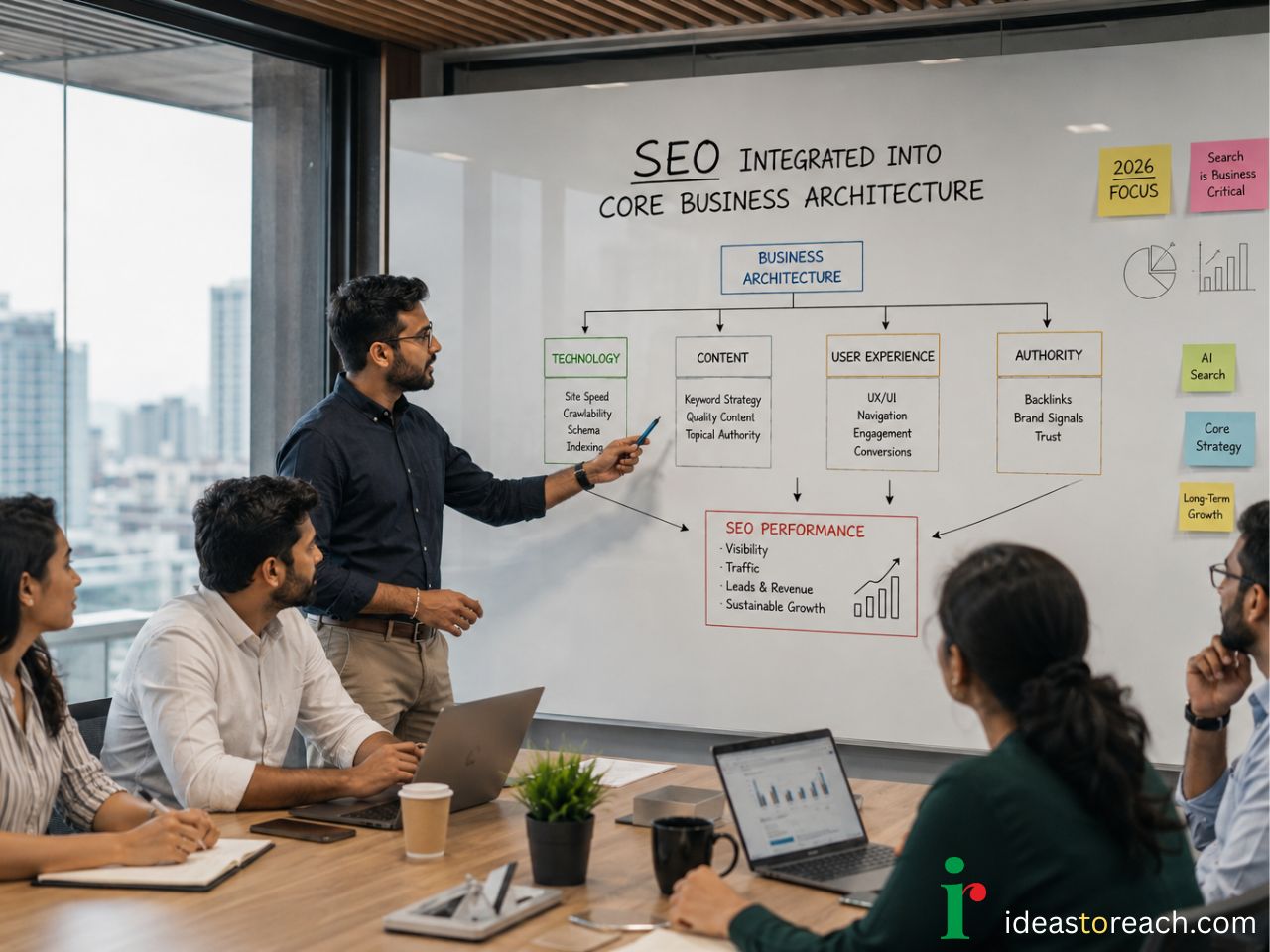
Effective Search Engine Optimization (SEO) is frequently misunderstood as a peripheral marketing activity rather than a fundamental component of digital business infrastructure. While many organizations categorize SEO under the broader marketing umbrella, this structural alignment often creates a disconnect between visibility goals and operational control. To achieve visibility and business growth in a sustained manner, a shift in organizational perspective is required—viewing SEO as a cross-functional system rather than a promotional campaign.
Treating SEO exclusively as a marketing function often leads to systemic underperformance. In this traditional model, SEO teams are held responsible for search visibility, yet they often lack the authority to implement the technical or structural changes necessary to achieve those results.
Fragmented Accountability: SEO outcomes are heavily dependent on technical performance, user experience (UX), and product design.
The Dependency Gap: When SEO is isolated within marketing, the team may identify critical issues—such as poor site architecture or slow load times—but must rely on separate engineering departments to prioritize these fixes.
The "Last-Minute" Fallacy: Organizations that view SEO as a promotional task often involve search specialists only after a product has been designed. This reactive approach frequently results in "band-aid" solutions that fail to address core architectural weaknesses.
Resource Misalignment: Without direct involvement in technology and business decisions, SEO strategies may conflict with broader company objectives, leading to wasted resources and missed opportunities for implementing advanced organic search strategies.
Modern search dynamics have evolved beyond simple keyword matching. The current landscape highlights that while automation is prevalent, the structural integrity of a website remains a human responsibility.
Technical SEO vs. AI Automation: While AI can assist in site generation, it does not inherently produce an optimized architecture. Human expertise is essential to ensure proper crawlability, correct site structures, and accurate meta-tag implementation. Relying solely on AI-generated sites without professional oversight can actively degrade search visibility.
The Resurgence of Original Creators: Recent algorithm updates favor "first-party" sites—the actual brands and product creators—over large aggregator platforms. This shift provides a significant advantage to brands that invest in their own digital property rather than relying on third-party forums.
Optimization for AI Overviews: As Google integrates in-line links and hover previews within AI-generated answers, ranking within generative search summaries has become a vital visibility strategy. It offers a sophisticated new channel for driving direct clicks from generative results.
Brand Trust as a Visibility Signal: The expansion of "Preferred Sources" features means that SEO now intersects directly with brand reputation. When users signal trust and loyalty by actively selecting a brand as a preferred source, it directly impacts that brand's overall search standing.
To overcome these obstacles, SEO must be integrated into the organization's technical and product development lifecycles. This ensures that search visibility is built into the product's DNA from the outset.
Technical SEO is the foundation of search performance. Successful execution requires a deep partnership with the development team to manage SEO for JavaScript-heavy websites, structured data implementation, and optimizing site speed for core web vitals.
Search engines increasingly prioritize user signals. Integrating SEO with UX design ensures that websites provide the high-quality experience that modern AI-driven search environments demand.
Beyond keyword placement, modern search success depends on Experience, Expertise, Authoritativeness, and Trustworthiness. This requires a collaborative effort between content creators and business leaders to establish genuine brand authority.
Redefining the role of SEO within a company is absolutely crucial for visibility and business growth in a sustained manner. When SEO is granted the proper authority and integrated into business decisions, it transitions from a "marketing task" to a foundational business asset. For businesses seeking the best seo agency in chennai, success is often found through this structural alignment rather than tactical tweaks alone.
A comprehensive roadmap for search visibility involves early involvement from leadership to ensure that search insights inform business strategy. This prevents the common pitfall of treating SEO as a last-minute task and instead uses it as a guide for how a business is built and experienced online.
For a deeper technical understanding of how authority and structure influence search performance, refer to the following comprehensive guides:
Essential Guide to Understanding Domain Authority: An overview of authority metrics and their role in SEO.
Technical Foundations of Site Authority: An exploration of the technical concepts behind site authority.
Strategies for Growing Domain Authority: Strategies for scaling visibility through ethical link acquisition.
Monitoring the Latest Search Ranking Trends: Stay informed on the evolving landscape of search algorithms and AI discovery.



Please send a WhatsApp message only. Kindly do not call :
+ 91 - 99 4040 1010 | + 91 - 94 97 40 1010
Email: [email protected]