
We see it all the time at Ideas To Reach. Website owners panic over an apparent drop in organic traffic. Total numbers look down. Alarms blare. But here's the truth: Your organic traffic might not have dropped at all. You're just staring at the wrong data.
Aggregate metrics hide the real story. A sudden drop in organic traffic in your dashboard? It could mask gains elsewhere. We've helped countless clients uncover this. Proper segmentation reveals what's really happening.
In this post, we share our expertise. Learn how to analyze organic traffic drop the right way. Fix it with precision. Boost your SEO traffic drop recovery.
Total organic traffic down? It's scary. But broad views mislead. A decrease in organic website traffic often stems from imbalanced data.
Search demand shifts. One keyword tanks. Others rise. Net result: Flat or up. Yet totals scream decline.
We've audited sites with this issue. Rankings hold. Impressions climb. Organic traffic down, but impressions up? Common trap.
Google organic traffic drop reports can lag. Or mix paid with organic. This results in false alarms.
Organic traffic decline reasons vary. But unsegmented data amplifies panic. We fix this daily.
Reasons for the sudden traffic drop in the website pile up fast. Organic search traffic down? Check these:
Google algorithm update: Cores hit hard. Organic traffic drops after Google update shakes rankings.
Technical SEO glitches: Crawl errors block pages.
Indexing issues: Pages vanish from results.
Keyword cannibalization: Pages fight for the same terms.
Seasonal dips: Queries fade post-holidays.
Don't stop there. Organic traffic decrease without penalty happens via SERP changes. Featured snippets steal clicks. Traffic dropped, but rankings are the same? CTR falls.
Page experience matters. Poor Core Web Vitals? Users bounce. Google demotes.
We've seen mobile usability tank traffic. Desktop fine. Mobile crashes.
Why is organic traffic dropping? Often, it's not. Blame unsegmented views.
Search impressions up? Great. But is the click-through rate (CTR) down? Traffic dips.
Landing page performance suffers. Slow loads kill conversions.
Search intent mismatch. Content doesn't match queries.
We recommend page-level traffic analysis. Totals hide winners and losers.
In one client case, there was a total SEO traffic drop. But branded queries soared. Transactional pages dipped. Check our guide on long-tail keywords for SEO for a clear idea.
Ready to dig in? How to segment organic traffic in Google Analytics (GA4) is key.
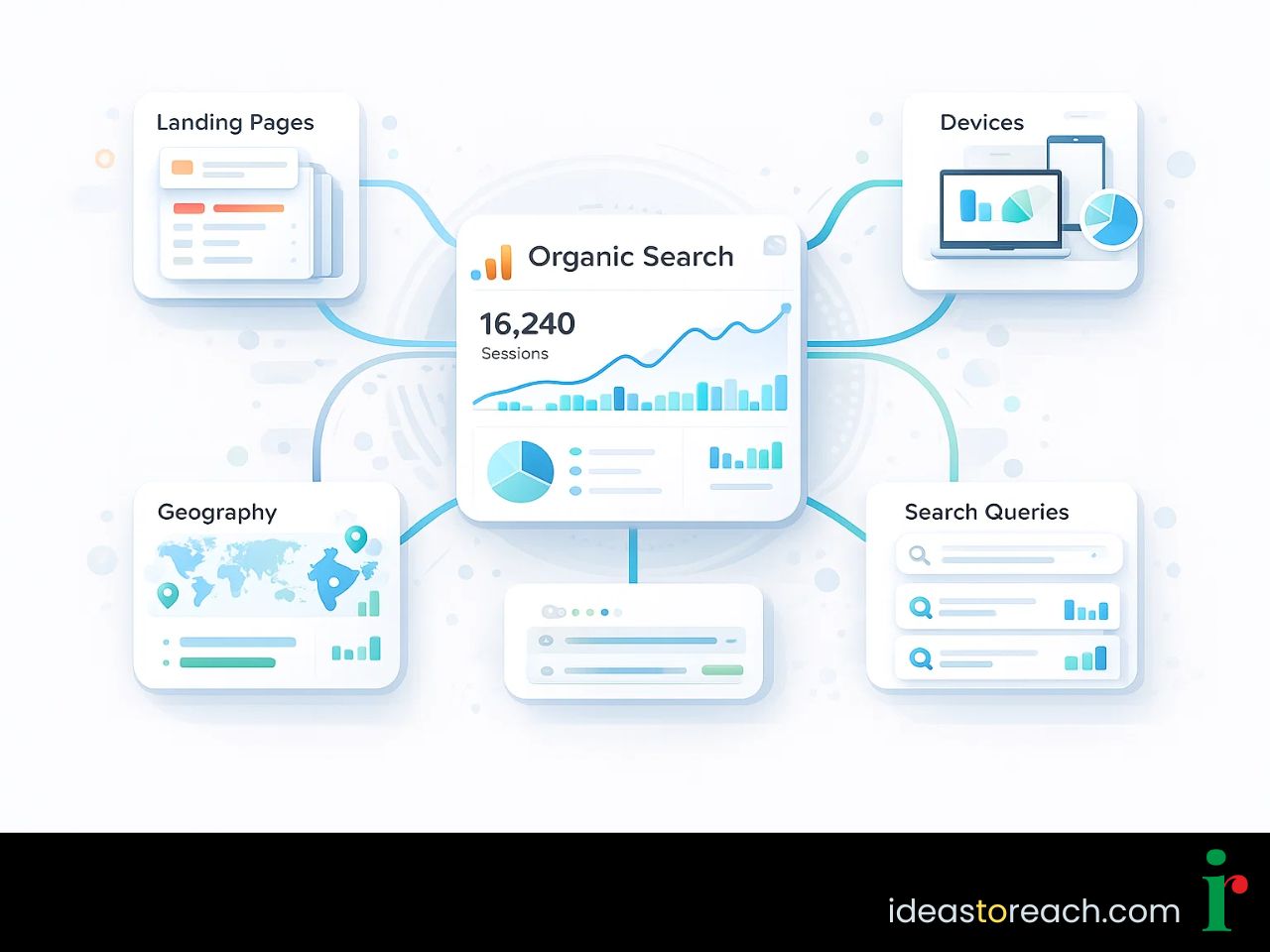
Organic sessions by source. Filter "Organic Search".
Break by:
Landing pages: Spot underperformers.
Devices: Mobile vs. desktop.
Geography: Local vs. global.
Search queries: Via GSC import.
Compare periods. Pre-drop vs. post. Use GA4's Explorations.
We set this up for clients. Uncovered organic traffic is down only on old pages. Solution: Refresh content. Learn how often you should update your website for SEO.
Follow our proven process. How to analyze oan rganic traffic drop correctly.
Link GA4 and GSC. Master Google Search Console advanced setup.
Check Performance report. Clicks, impressions, CTR. Filter organic.
Look for sudden drop in organic traffic. Date-specific?
Dive into search queries. High impressions, low clicks? CTR issue.
Page-level traffic analysis. Which URLs lost traffic?
Run PageSpeed Insights. Fix crawl errors in GSC.
Test mobile usability. Use Google URL Removals Tool for quick fixes.
Match search intent. Informational? Transactional?
Test freshness. Is your content tested or busted?
Create an SEO roadmap. Target fixes.
Adapt to Google AI mode SEO. Even a zero-volume keywords SEO strategy helps.
How to fix organic traffic drop? Targeted action. Not guesswork.
Segmentation flips the script. Website traffic dropped suddenly? Not overall.
One client: Total organic traffic dropped 20%. But new pages gained 35%. Old ones lost 40%.
Organic sessions by intent: Navigational up. Commercial down.
Fix: Optimize landing pages. Result: Recovery in weeks.
GA4 segments by engagement. High bounce pages? Revamp.
GSC shows query shifts. Organic traffic down for broad terms. Long-tail up.
We've boosted clients this way. As Chennai's best SEO agency, we segment surgically.
At Ideas To Reach, we've turned countless organic traffic drops into growth stories. Segment early. Use GA4 and GSC wisely. Act on page-level traffic analysis, not totals.
Organic traffic down? It's often a data mirage. How to fix organic traffic drop: Diagnose precisely, then optimize landing page performance, Core Web Vitals, and search intent.
Ready for real results? Partner with Chennai's best SEO agency. Let's segment your data and reclaim your traffic.
A sudden drop in organic traffic can happen due to multiple reasons such as Google algorithm updates, seasonal search demand changes, technical SEO issues, or incorrect data interpretation. Before assuming a penalty, it’s important to segment your traffic by pages, queries, devices, and locations using Google Analytics and Search Console.
To analyze an organic traffic drop correctly, segment your data by landing pages, search queries, page types, and user intent. Compare performance before and after the drop using Google Search Console and GA4 instead of relying only on total traffic numbers.
Yes, organic traffic can drop even when rankings stay stable. This usually happens due to reduced search demand, lower click-through rates, SERP changes like featured snippets, or increased competition above organic results.
Data segmentation helps identify exactly which pages, keywords, or user segments are affected. By isolating traffic by intent, page type, or device, you can take targeted actions instead of making broad SEO changes that may not solve the real issue.
The best tools to diagnose organic traffic drops are Google Search Console (for impressions, clicks, and queries) and Google Analytics 4 (for behavior, sessions, and engagement). Combining both gives a complete picture of traffic performance.



Please send a WhatsApp message only. Kindly do not call :
+ 91 - 99 4040 1010 | + 91 - 94 97 40 1010
Email: [email protected]