Written by : Viswanathan Ganesan 
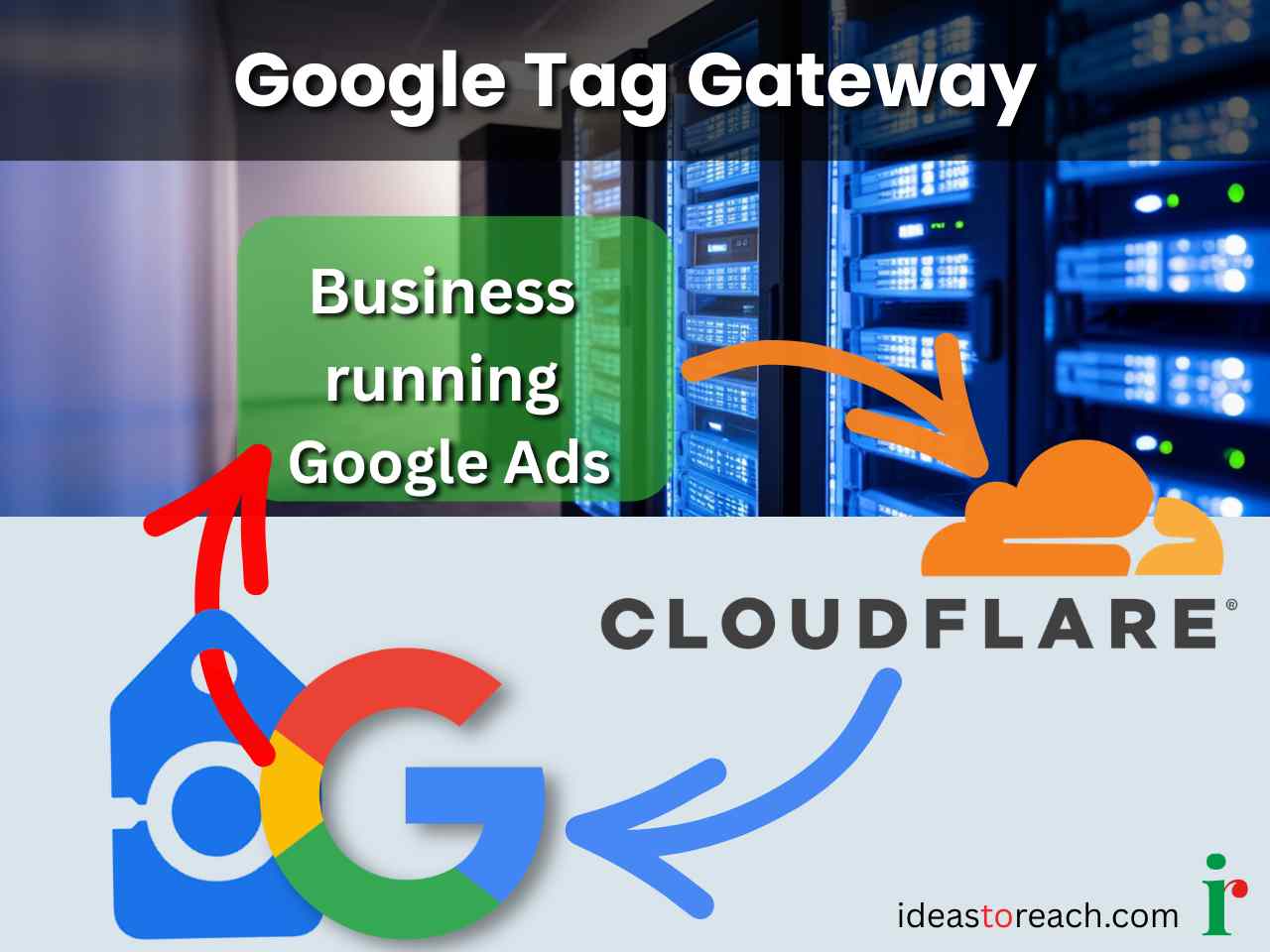

Since Google Tag Gateway (GTG) went generally available in mid-2026, most of what's been written about it follows the same shape: what it is, how it works, why it improves conversion accuracy. Fair enough - that's useful context. But almost none of it answers the question that actually matters if you're the one deciding whether to set it up: who does this genuinely help?
To find out, let's use three real advertiser profiles instead of hypotheticals:
The obvious assumption is that GTG matters more the bigger you get - more spend, more data, more to gain. That assumption turns out to be backwards.
In a hurry? Jump straight to the plain-English summary at the bottom of this page.
Yes, and unconditionally. There's no minimum spend, no account tier, no eligibility gate. Google's own setup documentation confirms that Tag Gateway works by loading your existing tag from your own domain instead of Google's - with no changes to your existing tag code required. It's free through Cloudflare's integration, and WordPress sites can enable it through the Site Kit plugin without touching a CDN at all. If the cake shop's site runs on WordPress with basic hosting, the owner (or whoever manages the site) could turn this on this afternoon.
So budget was never the real barrier. Technical access is. A cake shop with no developer and no CDN relationship has a much smaller chance of ever discovering, let alone configuring, this feature - regardless of what it would do for their data. NuTech, spending 20x more, is far more likely to have a web developer, an agency, or an in-house marketing person keeping up with Google Ads changes. Amazon has entire teams for this. The gap isn't affordability - it's who has someone paying attention.
If you're unsure whether your own site's setup can even support this kind of change, that's worth checking through a proper website and online visibility audit before assuming either way.
Here's where it gets counterintuitive. Ad blocker usage in India sits around 50% - notably higher than the global average of roughly 30-42% - largely because Indian users block ads to save mobile data, not just for privacy. So the cake shop's hyperlocal Ambattur audience is, if anything, more likely to have ads blocked than a comparable audience in the US or UK, not less. Signal loss isn't a "developed market" problem that skips over small local advertisers = it happens to nearly everyone at roughly the same rate.
What differs isn't whether signal gets lost. It's how much that lost signal costs you.
Google's Smart Bidding needs a steady flow of conversions to optimize reliably. A cake shop running ₹50,000/month, in a single pincode, is likely generating only a small handful of trackable conversions in any given month. If a third to half of those never get recorded because of ad blockers, that's not "10% noisier data" - that can be the difference between Smart Bidding having enough signal to make good decisions and Smart Bidding operating almost blind. At that scale, every recovered conversion is disproportionately valuable. This is also why it's worth staying skeptical of any bidding automation that promises results without giving you visibility into what's actually driving them - a caution we've written about before in why we say no to the Google Ads AI push.
NuTech, with far more volume, is less fragile - but real estate lead-gen is still a relatively low-volume, high-value conversion category, so the recovered signal likely still moves the needle on how well Smart Bidding understands what's actually working.
Amazon sits at the opposite end. Recovering the 11-14% conversion uplift Google reports advertisers seeing on average, against millions of existing data points, barely shifts anything. Their bidding algorithms are already well-fed. The uplift is real, but it's a rounding error against their existing scale.
Paradoxically, on a pure data basis, the smaller, data-starved advertiser has the most to gain proportionally - not the least. The businesses spending the least are often the ones whose automated bidding is most vulnerable to losing a handful of conversions to blockers.
But data value and practical adoption are two different things:
The real sweet spot is the middle: enough conversion volume for the recovered signal to change decisions, and enough resourcing to actually flip the switch. Enterprise advertisers can implement it trivially but barely need it. Small local advertisers need it the most but are least likely to ever turn it on unless someone tells them it's free and takes fifteen minutes.
If you do go ahead and set it up, verify the data is actually landing correctly rather than assuming it is - our advanced Google Search Console setup guide is a good place to start checking your tracking health before and after the switch.
Google's own reported uplift figures - the 11-14% conversion increases cited above and elsewhere - come from a very short window. The Cloud integration only reached general availability on June 1, 2026, and even the earliest CDN rollouts (Cloudflare, the GCP beta) only go back to early 2026. These are early, self-reported numbers over a matter of months, not an independently verified, long-run dataset. Treat them as directionally useful, not gospel - and treat the advertiser-tier conclusions above as a reasoned framework rather than a proven benchmark. Nobody has enough sampling time yet to say for certain.
It's also worth remembering that tracking accuracy is only half the picture - a slow website undermines both your ads and your organic rankings regardless of how well your tags are set up. If you haven't looked at this recently, see why mobile speed matters for SEO.
If you're a small, hyperlocal advertiser like the Ambattur cake shop: this is free, it takes minutes if your site runs on WordPress or Cloudflare, and it may matter more for your bidding accuracy than you'd assume - not less. If you're mid-sized like NuTech: this is close to a no-brainer if you already have technical support in place. If you're operating at Amazon's scale: it's good hygiene, but don't expect it to move your numbers meaningfully.
Budget was never the deciding factor. Conversion volume and who's minding the setup are.
 Link Copied!
 If you're short on time, or explaining this to someone who isn't in advertising, here's the whole argument in a few plain sentences:
In one line: everyone assumes this tool helps big spenders more; the data actually says it matters most for small businesses' accuracy - they just don't have the technical help to use it.
Viswanathan Ganesan, Managing Director of Ideas to Reach India Pvt. Ltd., is a hardcore advertising professional since 1982. He comes from the labs of Ogilvy and has also worked for institutions with assistance from UNCTAD. He brings global expertise in Google Ads and SEO to businesses across real estate, banking and finance, telecom, healthcare, hospitality, education, and FMCG. Connect with him on LinkedIn.



Please send a WhatsApp message only. Kindly do not call :
+ 91 - 99 4040 1010 | + 91 - 94 97 40 1010
Email: [email protected]