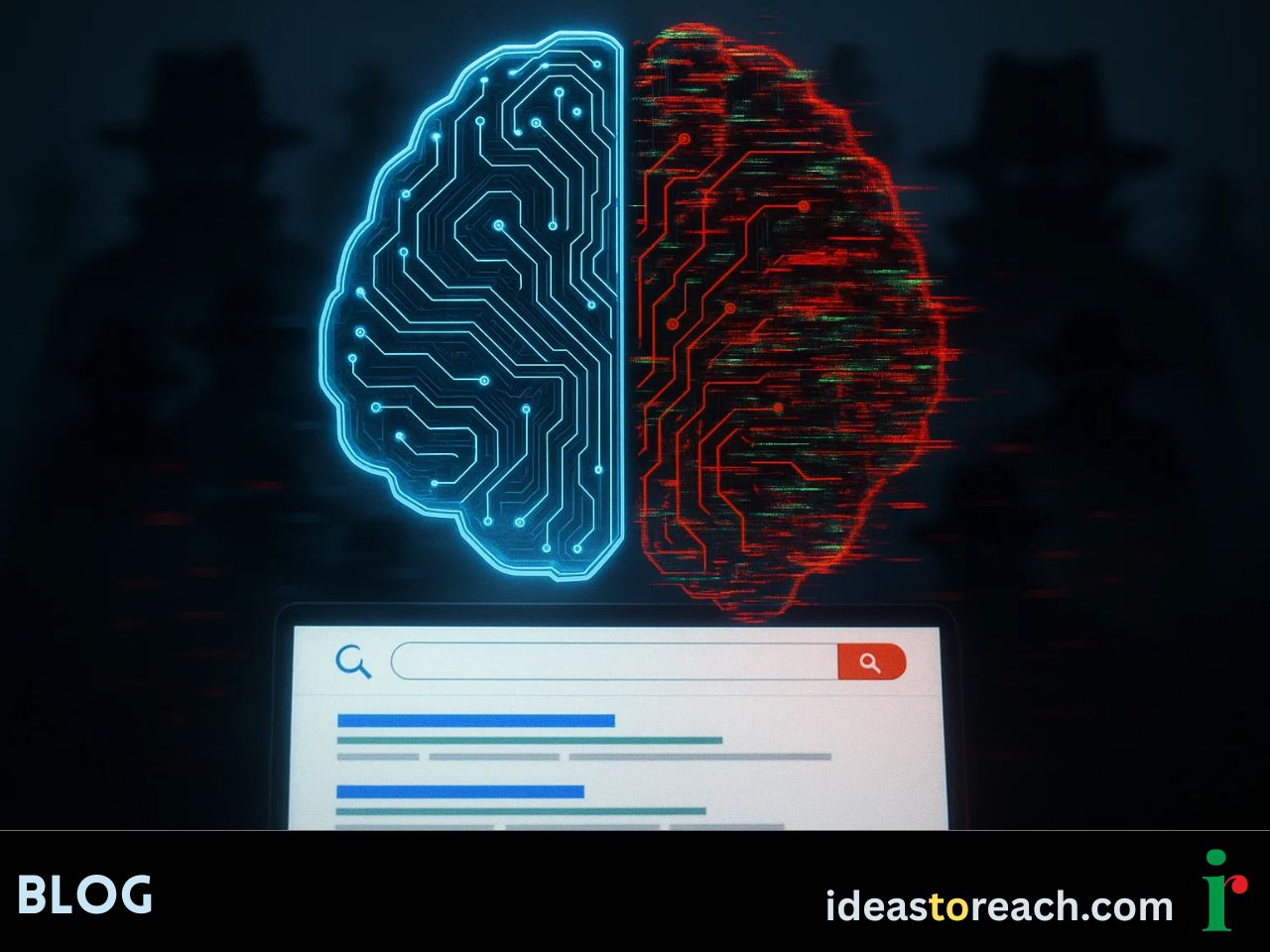
At Ideas To Reach, we recognize AI poisoning in SEO as one of the most critical and emerging threats facing website owners and digital marketers today. This insidious form of black hat SEO manipulation exploits vulnerabilities in machine learning models that underpin search engine algorithms, skewing results with low-quality or malicious content. This blog explains AI poisoning in SEO, its implications for Google rankings globally (including India), prominent examples from 2025, and strategies for protecting your website against this growing SEO security threat.
AI poisoning in SEO refers to deliberate manipulation of AI systems, such as Google’s ranking algorithms or AI content generators, using misleading or maliciously crafted data. This “training data manipulation” causes machine learning models to incorrectly rank harmful, spammy, or low-quality websites higher in search engine results than they deserve. The tactic is a sophisticated evolution of spamdexing or search engine poisoning, leveraging adversarial AI attacks.
What is AI poisoning in SEO? It tricks models into favoring spam over quality sites. Black hat SEO techniques employ AI poisoning to inject fake signals and spam content that confuse AI models. These models, designed to assess expertise, experience, authoritativeness, and trustworthiness (E-E-A-T), become vulnerable to adversarial prompts and data poisoning in AI. As a result, search engines are tricked into boosting manipulative or fraudulent pages, harming SERP integrity and genuine businesses that follow ethical SEO practices.
We encounter this daily in our SEO audits. Search engine poisoning spreads disinformation campaigns. Content farms pump out manipulated pages. This algorithm exploitation in SEO erodes trust. We advise clients to spot these early, much like addressing friction in AI search FLUQs.
In 2025, AI SEO manipulation has become more automated and potent with widespread use of large language models and automated content generation. Black hat SEO methods used in 2025 now leverage AI-generated spam SEO content and poisoned backlinks that feed AI trustworthiness models with erroneous signals.
SEO poisoning schemes now combine traditional black hat methods with AI-based black hat SEO tools to watch out for. Attackers generate adversarial datasets to confuse search engine ranking models, exploiting model vulnerability and cybersecurity gaps in SEO. Learn more about safe generative AI SEO strategies.
These black hat SEO techniques include:
Injecting poisoned backlinks and spam content into public datasets
Creating fake user reviews and comments to boost manipulated sites
Automated generation of adversarial prompts to deceive AI ranking models
Using browser fingerprinting to target victims with malware-laden SERPs tied to AI-related queries
To counter this, focus on human-centric AI approaches that prioritize quality.
How AI poisoning affects Google rankings is clear worldwide, including in India. Can AI poisoning damage website ranking in India? Yes, it can. Indian markets adopt AI fast. Poisoned data distorts local signals.
AI poisoning can profoundly impact websites' organic visibility. As Indian businesses increasingly rely on AI-driven SEO tools, they face risks that poisoned data distorts ranking signals. AI-generated spam SEO and search engine poisoning manipulate local search results in India, often promoting low-quality or fraudulent pages over authentic ones.
This impacts sectors from e-commerce to local services, pushing trustworthy Indian websites lower in Google rankings. Furthermore, these tactics threaten SERP integrity for queries in widely spoken Indian languages, amplifying SEO risks of using AI-generated content without verification. To maintain competitiveness in India’s vibrant market, businesses must adopt proactive SEO security strategies, such as optimizing for AI overviews.Businesses in Mumbai and Delhi see drops. Google ranking manipulation ignores borders. Local E-E-A-T matters more now. We serve Indian clients hit hard.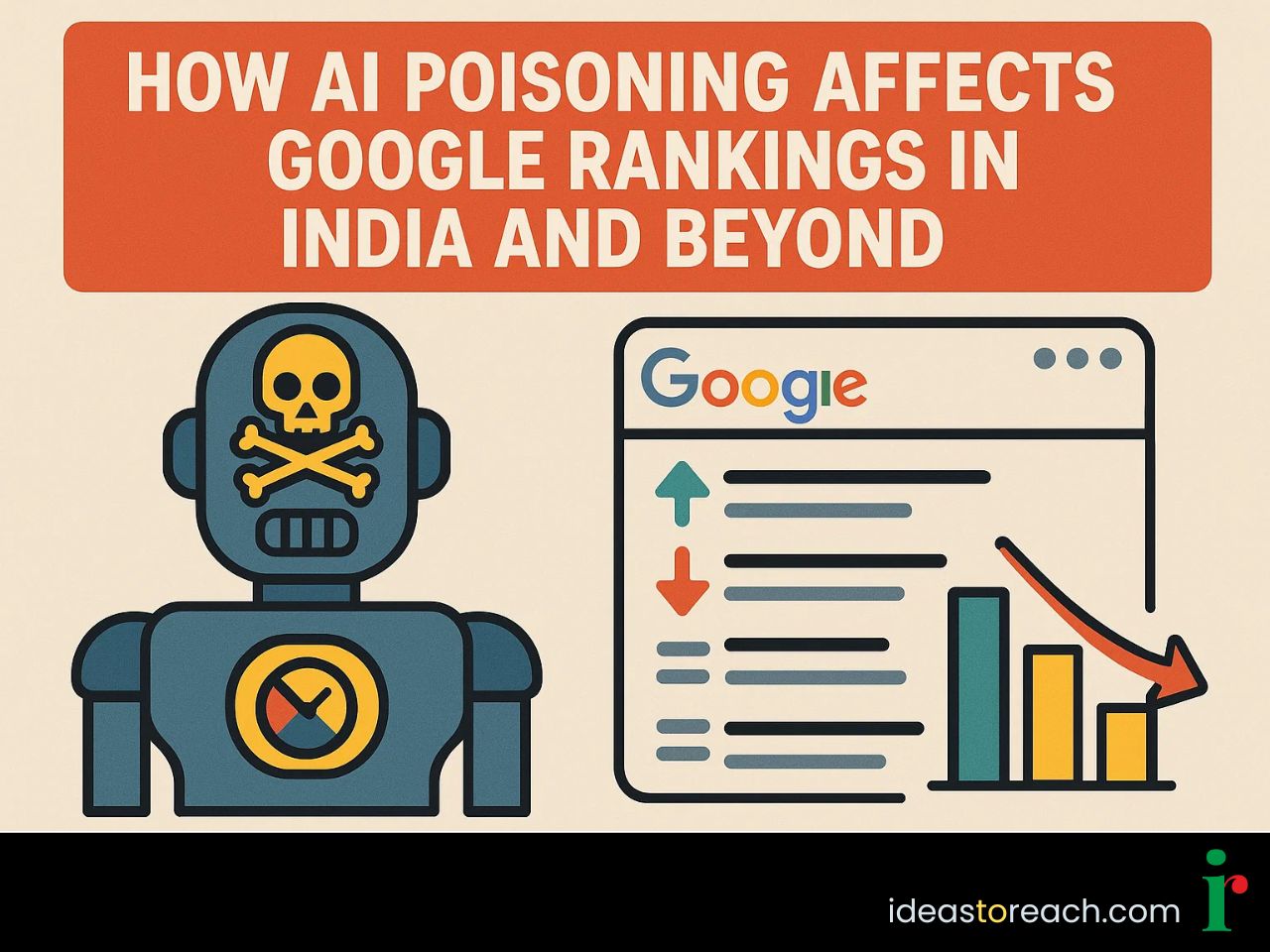
Examples of AI poisoning in SEO abound in 2025. Several recent SEO poisoning campaigns demonstrate the gravity of the threat:
Malware Distribution via AI-Themed Sites: Research uncovered malicious AI-themed websites exploiting black hat SEO to rank high for popular AI search terms. These sites spread malware like Vidar Stealer and Legion Loader through complex redirect chains. Users searching for AI tools could unwittingly download malicious payloads because of search engine poisoning affecting Google rankings.
University-Hosted Fake Documents: SEO poisoning tricks large language models and search engines. Fraudulent PDFs with fake support phone numbers for major brands were hosted on credible university domains, fooling both users and AI systems into considering them trustworthy.
Operation Rewrite: Chinese-speaking threat actors deployed BadIIS malware in an SEO poisoning campaign. They used custom keyword-stuffed HTML to poison search results on victim sites, resulting in manipulated Google rankings and widespread enterprise impact.
Phishing Promotion Through Compromised Sites: Platforms like Hacklink enable injection of malicious code into thousands of compromised legitimate websites. Customized anchor text drives traffic to phishing domains via SEO poisoning, showcasing how black hat SEO manipulates search engine algorithms at scale.
We track these cases. Rankings plummet overnight for clean sites. Our tools detect shifts fast. See how to rank on Google AI overviews.
How to protect your website from AI poisoning? At Ideas To Reach, we recommend a multi-layered defense approach emphasizing cybersecurity in SEO:
Use Reputable AI SEO Tools: Avoid low-quality, unverified content generators that risk injecting manipulated or spammy data into your content ecosystem. Explore AI summaries optimization.
Regularly Monitor Backlinks: Employ backlink monitoring tools such as Ahrefs or SEMrush to detect suspicious and potentially poisoned links early.
Implement Content Authenticity Checks: Use plagiarism detection and originality verification services to ensure your content remains genuine and authoritative.
Apply Advanced Spam Detection: Integrate spam filtering plugins and cybersecurity measures to block adversarial bot traffic and data injections.
Follow Google's E-E-A-T Guidelines: Demonstrate clear expertise, experience, authoritativeness, and trustworthiness in your content to build resilience against AI SEO manipulation.
Audit Your Data and SERP Positions: Conduct periodic audits to cleanse poisoned datasets, remove suspicious content, and safeguard your site’s reputation.
Convert rankings to revenue with strategies like those in our guide on SEO rankings into business revenue. Partnering with experienced SEO agencies like Ideas To Reach ensures tailored protection strategies. Visit our SEO security services to learn more. We implement these daily. Train teams on threats.
Stay alert to new threats like those in Chrome AI mode and build resilient links via AI summaries.
AI poisoning in SEO represents a pivotal shift in black hat SEO techniques, demanding vigilance from businesses worldwide. As threat actors exploit machine learning models with increasing sophistication, the stakes for SERP integrity and brand trust have never been higher. At Ideas To Reach, our proven experience in combating algorithm exploitation in SEO positions us to guide clients through these challenges. By prioritizing E-E-A-T, robust monitoring, and ethical practices, websites can fortify against adversarial AI attacks and data poisoning. Stay ahead—reach out for a free audit to secure your rankings today.
AI poisoning in SEO refers to the manipulation of AI models, like Google’s ranking systems or content generators, using misleading or malicious data. This causes search engines to rank low-quality or harmful pages higher in SERPs. At Ideas To Reach, we see it distorting fair competition and SERPs.
Black hat SEO practitioners use AI poisoning to inject fake signals, spam content, or manipulated data into AI systems. This can trick search engines into believing a page is authoritative, helping it rank artificially high. Vigilant monitoring is crucial to counteract this.
Yes. As Indian businesses rapidly adopt AI-driven SEO tools, poisoned data can distort ranking signals. This can push genuine Indian websites lower on Google while promoting AI-generated spam or manipulated content. Our expertise helps mitigate this risk.
Websites can protect themselves by avoiding low-quality AI tools, monitoring backlinks regularly, applying content authenticity checks, and using advanced spam-detection plugins. Following Google’s E-E-A-T guidelines also reduces vulnerability. Ideas To Reach offers customized strategies for defense.
While India does not yet have AI-specific legislation, AI poisoning can fall under offenses related to cyber fraud, digital manipulation, and unethical data practices. It may attract penalties under the IT Act depending on intent and damage. Compliance is vital.



Please send a WhatsApp message only. Kindly do not call :
+ 91 - 99 4040 1010 | + 91 - 94 97 40 1010
Email: [email protected]