At Ideas To Reach, we work closely with brands navigating constant Google updates, AI-driven search, and evolving ranking systems. One question we hear repeatedly is, “Are links still a ranking factor, or have they become just another trust signal in modern SEO?”
The short answer is that links still matter, but not in the way they once did. Google’s algorithm in 2026 and beyond evaluates backlinks through a far more sophisticated lens, combining AI search ranking factors, behavioural signals, and E-E-A-T principles. In this reality check, we break down what links actually do today, how Google evaluates backlinks now, and what this means for businesses, especially in India.
When Google launched PageRank, links were the backbone of rankings. More links meant higher authority. But that era is long gone.
Today, Google ranking factors 2026 reflect a system powered by:
Google AI Mode
Helpful Content System
SpamBrain
Link Spam Updates
Search Generative Experience (SGE)
So, are links still a ranking factor? Yes, but they function more as validation signals rather than direct ranking levers.
Google now looks at why a link exists, not just that it exists.
To understand whether the backlinks ranking factor in 2026 will still apply, we must clarify the difference between ranking factors and trust signals.
Ranking factors directly influence position (content relevance, intent match).
Trust signals help Google decide whether to trust that content.
Backlinks have shifted closer to the trust signal side. They support rankings only when aligned with:
Topical authority
Content authenticity
Brand trust
Entity-based SEO signals
This explains why many websites with fewer links still outrank heavily linked competitors.
Modern Google link signals focus on quality, context, and relevance.
What Google Values Today:
Editorial links from authoritative referring domains
Contextual relevance and topical alignment
Natural anchor text usage
Brand mentions and citation signals
Links that reinforce E-E-A-T signals
What Google Ignores or Discounts:
Paid or manipulative links
Over-optimised anchor text
Low-quality directories
Spammy blog networks
Thanks to SpamBrain, the impact of low-quality backlinks on rankings is minimal. Google simply discounts them.
This is why do backlinks still matter depends heavily on link quality and intent.
So, is link building still relevant in an AI-first search ecosystem?
Yes, but traditional link-building tactics are obsolete.
Effective link strategies today focus on:
Building topical authority through content clusters
Earning links via expertise-driven content
Strengthening brand mentions across platforms
Supporting AI summaries and SGE visibility
We explain this in detail in our guide on building links for AI summaries.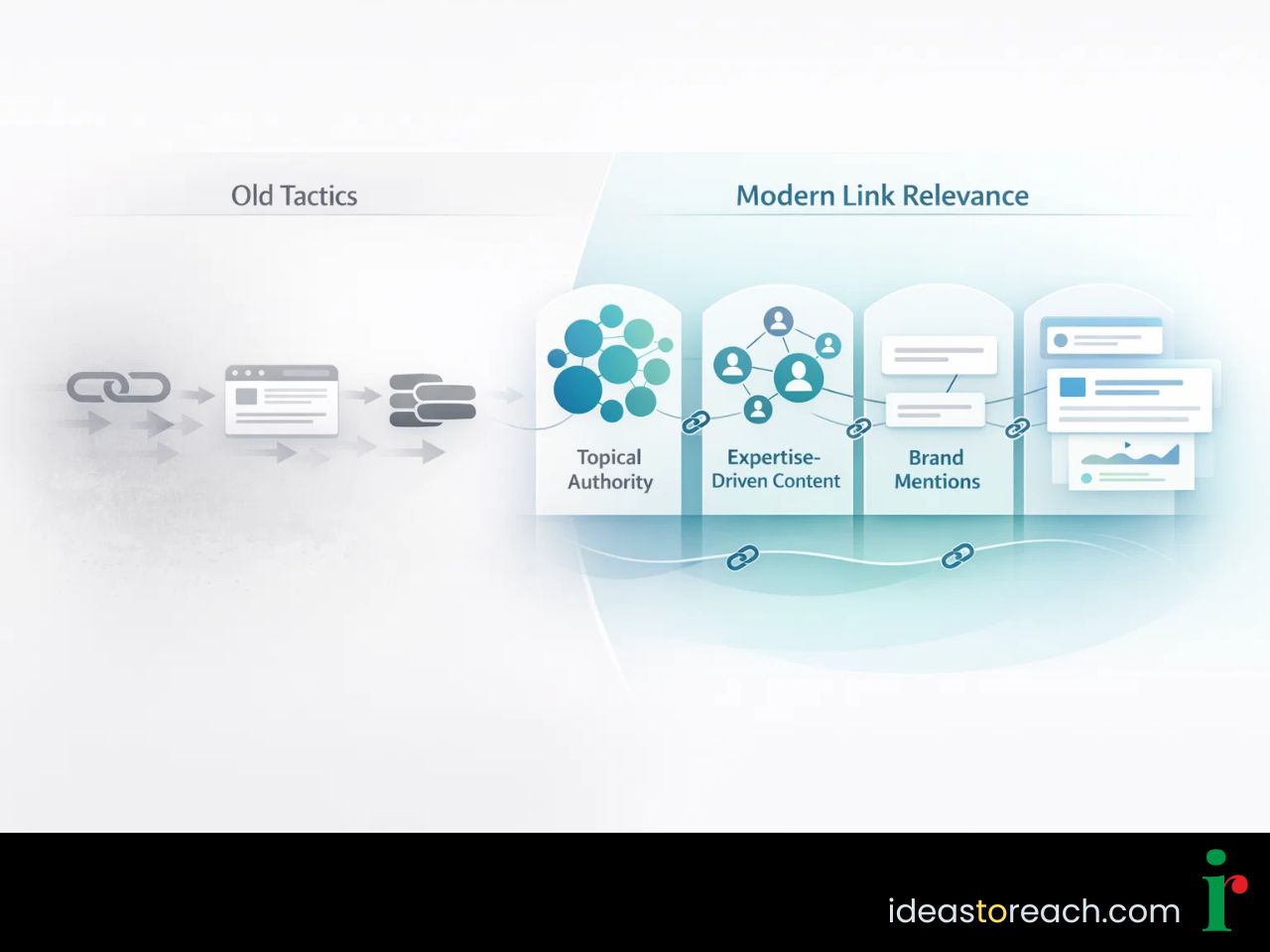
With AI-driven search results, Google doesn’t rank pages as it ranks entities.
The role of backlinks in AI search results is to:
Validate brand authority
Support entity trust
Confirm real-world credibility
Links help AI systems decide which sources are reliable enough to cite. This makes backlinks more about SEO trust signals than raw ranking power.
For competitive niches, especially in India, the answer is yes—but with nuance.
If you’re asking:
Are backlinks still important for SEO in 2026?
Do links still help website ranking?
They do as only when combined with:
High dwell time
Strong CTR
Helpful, original content
Clear first-hand experience signals
Without these, backlinks alone rarely move rankings.
There is no fixed number.
The question of how many backlinks are needed to rank in India depends on:
Competition level
Industry authority benchmarks
Referring domain quality
Topical relevance
A focused link building strategy for Indian websites should prioritise:
Regional authority domains
Industry publications
Editorial placements
Brand-led PR mentions
We cover authority metrics deeply in our domain authority guide.
At Ideas To Reach, we approach SEO holistically.
Links support rankings only when they reinforce:
Content depth
Entity authority
Structured data clarity
Explore how structured data enhances AI search visibility in our article on structured data and AI search.
Google’s E-E-A-T system prioritises brands with:
Real expertise
Consistent publishing
Verified authorship
Strong topical maps
That’s why we focus heavily on topical authority frameworks, explained in our guide on topical maps for SEO.
Links amplify trust, but they don’t replace it.
Several internal systems reduced the overreliance on backlinks:
BlockRank AI (read more on Google BlockRank)
AI poisoning safeguards (AI poisoning in SEO)
Brand and entity validation layers
These systems confirm that are links still a ranking factor is no longer a yes-or-no question as it’s conditional.
Instead of chasing volume, focus on:
High-authority referring domains
Brand mentions and citations
Content-led link earning
User engagement optimisation
Also, strengthen your E-E-A-T foundation, as discussed in our guide on E-E-A-T and brand authority and domain authority vs digital PR score.
Yes, links are still a ranking factor, but their role has changed. Google now uses backlinks more as trust and validation signals rather than direct ranking boosters. Quality, relevance, and editorial context matter far more than link quantity.
Backlinks still matter in 2026, especially for competitive niches in India. However, Google prioritises authoritative links from relevant sources, combined with strong content quality, user engagement, and brand credibility.
Content quality is now more important than backlinks. Backlinks support rankings only when they reinforce useful, original, and experience-driven content. Without strong content, backlinks alone rarely sustain rankings.
Google largely ignores low-quality or manipulative backlinks instead of penalising sites. With systems like SpamBrain, Google focuses on discounting bad links rather than letting them influence rankings.
So, are links still a ranking factor? Yes, but their role today is far more nuanced than before. Backlinks no longer act as standalone ranking boosters. Instead, they function within a broader trust ecosystem shaped by Google’s AI-driven algorithms, E-E-A-T signals, and user behaviour data.
In modern SEO, links help validate authority by signalling credibility and relevance from trusted sources. However, content drives relevance by directly answering user intent with originality, depth, and real-world experience. At the same time, user engagement confirms usefulness, as metrics like dwell time, CTR, and repeat visits help Google understand whether content truly delivers value.
At Ideas To Reach, we build sustainable SEO strategies where backlinks strengthen trust and authority rather than manipulate rankings. That balanced, future-ready approach defines SEO success in 2026 and beyond.



Please send a WhatsApp message only. Kindly do not call :
+ 91 - 99 4040 1010 | + 91 - 94 97 40 1010
Email: [email protected]