
In today's digital world, voice search SEO is becoming increasingly important. With the rise of smart speakers and voice-activated devices like Siri, Google Assistant, and Alexa, many voice search users now give commands instead of typing. This shift in voice search technology shows how quickly people search online using everyday language.
But what does this mean for your website's visibility and search engine rankings? Let’s explore how you can optimize your web pages for voice search in a post-AI landscape, using conversational SEO strategies that support both traditional SEO and modern voice optimization.
Voice search allows users to ask questions or give commands using their voice instead of typing on a keyboard. Unlike traditional text-based search, voice search differs because it sounds more natural and conversational. For example, instead of typing “best pizza places,” a user might ask, “What are the best pizza places near me?” These voice search queries tend to be longer, more detailed, and often include local queries, especially for local businesses.
Voice search is important because it reflects how people naturally communicate. It is faster and more convenient, especially on mobile and smart devices.
With the growth of digital voice assistants, voice search trends show that more people prefer asking questions in a natural way.
This means your digital marketing strategy needs to include voice search optimization strategies so your content appears in search engine results pages (SERPs), featured snippets, local seo and even Google Maps for local voice search queries.
Plus, voice search helps users get relevant information and concise answers quickly, one major reason why voice search matters in today’s search behavior.
AI and Natural Language Processing (NLP) help search engines understand the intent and context behind voice search queries. This makes your content’s conversational tone more important than ever.
AI-powered systems like Google's NLP interpret context, location, and intent, all essential for local search optimization, local listings, and Google’s search engine results. Because AI understands how conversational search works, you need to create content that matches how users speak in everyday language.
This means optimizing not just for keywords, but also how voice search keywords and search queries are phrased naturally.
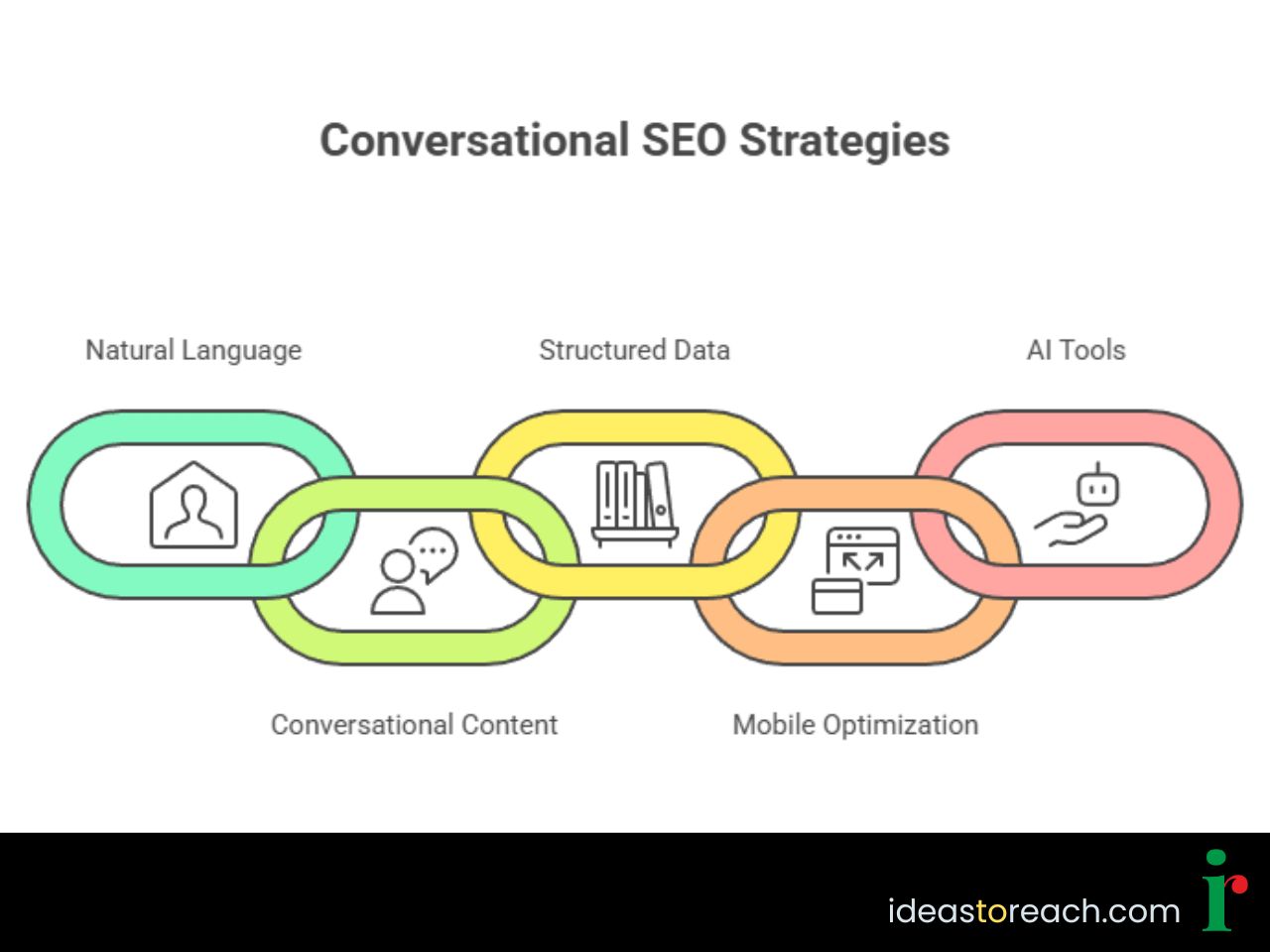
NLP has emerged as an integral part of our digital landscape for several reasons. To optimize your website for voice search, here are a few best practices:
Voice searches often use complete questions and longer phrases. Instead of targeting short terms like “SEO tools,” optimize for conversational phrases such as “What are the best SEO tools for beginners?” This aligns with natural voice search queries.
Use Question-Based Keywords: Incorporate "who," "what," "when," "where," and "how" questions into your content. For example, "How do I improve my website's SEO?"
Long-Tail Keywords: Use specific phrases that reflect conversational language, such as "affordable SEO services for small businesses."
Local keywords: Include phrases people use for neighbourhood-based searches.
Research keywords: Study how voice search keywords differ from typed terms, if if they zero search volume.
Write content in a friendly, conversational tone that feels natural. Avoid heavy jargon and overly technical language.
From a search engine optimization perspective, content that sounds like human written content or human conversation is more likely to appear in google searches for voice results. Use simple sentences and focus on providing clear, direct answers to common questions.
FAQ Sections: Include FAQ sections and FLUQs that address user queries directly. This not only helps with voice search but also improves user experience.
Concise Answers: Provide relevant information in short answers.
Audience perspective: Think from your target audience’s perspective
Schema markup helps search engines understand details about your content, which improves voice search rankings and boosts your appearance in featured snippets. This is especially important for voice assistants, which often pull answers directly from these snippets.
Example: Use schema markup to highlight business hours, location, or reviews, which are commonly searched for via voice.
Most voice search users speak into mobile devices or smart devices, so mobile optimization is an essential part of technical SEO. Ensure your website is mobile-friendly and loads quickly to meet user expectations and improve rankings.
Mobile Optimization: Ensure that your website's design and layout work well on smaller screens.
Page Speed: Use tools like Google PageSpeed Insights to check and improve your website's loading speed.
AI tools can help streamline your voice search optimization efforts. They analyze user data, track keyword performance, and suggest improvements based on conversational patterns.
Tools like ChatGPT can help brainstorm content ideas and optimize existing content for target keywords:
Generate topic ideas
Structure voice search optimization strategies
Create conversational, natural content
Improve your digital marketing strategy
As voice commerce sales grow, adopting AI is key.
Optimizing for voice search in a post-AI landscape requires a deep understanding of conversational SEO. By focusing on natural language, long-tail keywords, and structured data, you can improve your website's visibility in voice search results.
Remember, voice search is not just about technology; it's about understanding how people communicate naturally. By embracing these strategies, you can stay ahead in the evolving digital landscape and capture the growing audience using voice search.
At Ideas to Reach, we are more than just an SEO agency, we are your committed partners in navigating the digital landscape. With our expertise in voice search optimization and conversational SEO, we will help your business truly shine.
Why settle for ordinary when you can be extraordinary? Connect with us today, and let us craft a powerful strategy that delivers remarkable results!
Voice search SEO helps your content appear in spoken voice queries. It is allowing your website to gain visibility and attract more traffic from users who rely on digital assistants.
To optimize your website, understand how voice search work, answer questions directly, target long-tail queries, and improve mobile experience.
Voice searches often include “near me” requests, so optimizing your google business profile improves your chances of showing up for local customers.
Fast-loading pages are essential because voice assistants prefer websites that deliver answers quickly, especially in local seo results.
Long-tail, question-based phrases that sound natural, often called conversational keywords. These keywords perform best for voice-focused content.



Please send a WhatsApp message only. Kindly do not call :
+ 91 - 99 4040 1010 | + 91 - 94 97 40 1010
Email: [email protected]