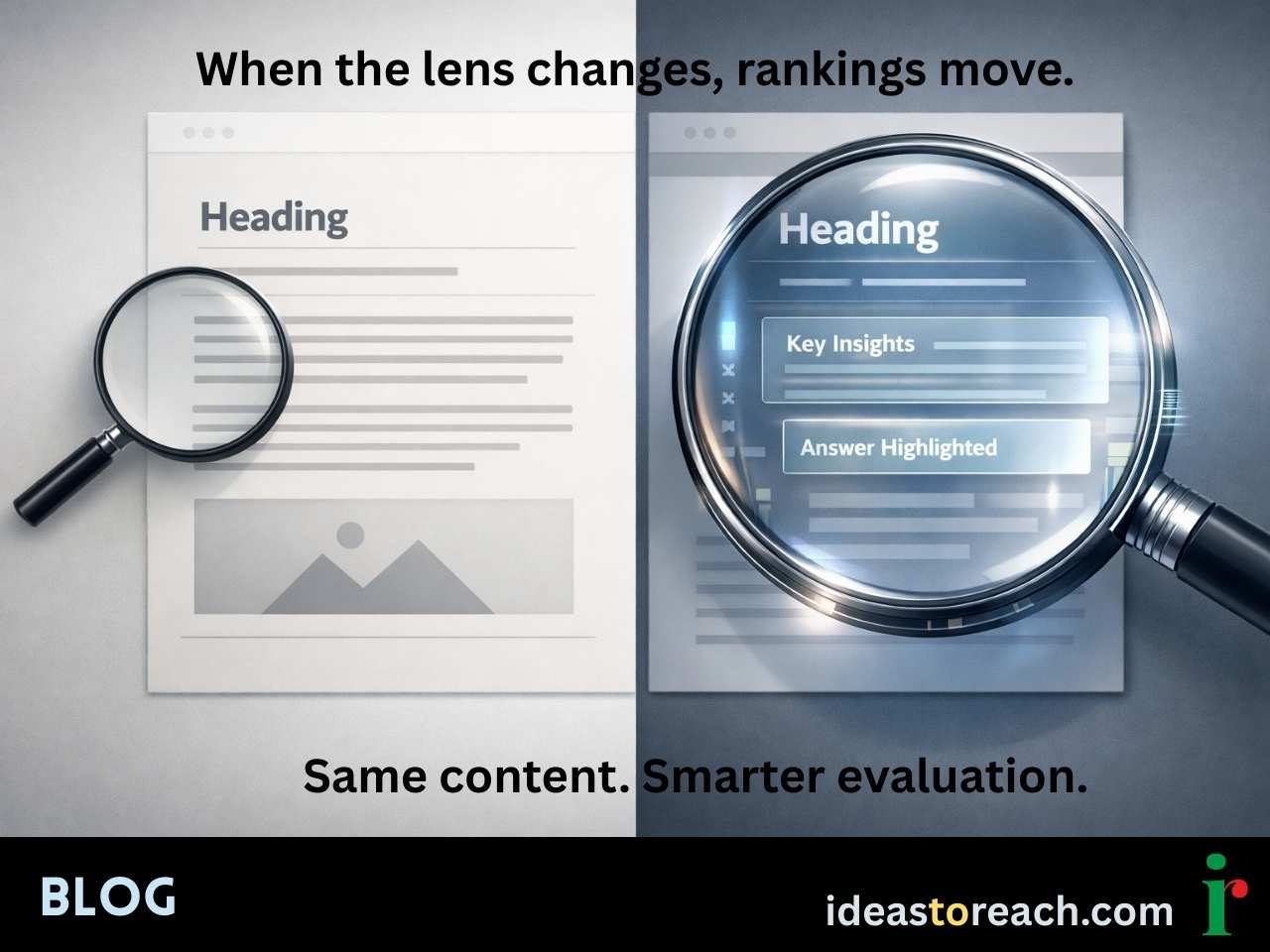
Google officially began rolling out its December 2025 Core Update on December 11. Like all core updates, the rollout is expected to take several weeks to fully complete.
A core update is not a penalty and it does not target individual websites. Instead, it is a broad upgrade to how Google’s main ranking systems evaluate and compare content across the web, as outlined in Google’s official core updates documentation.
In simple terms, Google is getting better at deciding:
Which pages are most helpful for a given search
Which content best matches what a user is actually trying to find
Which results deserve stronger visibility today, based on current expectations, not historical performance
This shift ties closely to how Google increasingly values E-E-A-T signals, experience, expertise, authority, and trust, rather than surface-level optimisation.
This is why rankings can change even if you haven’t updated your website recently. Google isn’t reacting to your site alone. It’s reassessing everything together using a more refined judgment system.
Unlike smaller updates that focus on specific issues like spam or page experience, core updates look at the entire search landscape rather than individual problems.
During a core update, Google compares:
Your content against competing content
Current search intent against older assumptions
How users actually interact with search results, not just what’s written on the page
As a result:
Some pages move up because they align better with what users expect today
Others move down because clearer or more relevant alternatives now exist
Many websites see mixed outcomes, with some sections improving while others decline
This movement is normal and expected. It reflects prioritisation, not punishment.
Just before announcing the December update, Google updated its documentation to clarify a long-standing question in SEO.
Google confirmed that smaller core ranking updates happen continuously, even between major, named core updates.
What this means for businesses and marketers is significant:
You don’t have to wait for a big update to see improvement
Content and UX enhancements can be recognised gradually
SEO progress is no longer locked to a few major update dates each year
The December core update sits on top of these ongoing changes, which explains why ranking movement can feel gradual, uneven, or delayed rather than sudden.
When rankings move, the instinct is to act quickly. In most cases, that’s the wrong approach.
Instead of reacting immediately:
Track performance trends over several weeks
Compare behaviour with earlier updates in March and June
Identify which pages gained or lost visibility and why
Separate algorithm-related movement from seasonal demand, campaigns, or content launches
This is where having a clear SEO Roadmap becomes critical.
Core updates reward clarity, usefulness, and consistency over time, not rushed fixes or reactive changes.
Alongside ranking changes, Google expanded Preferred Sources globally for English-language users.
This feature allows users to choose which publishers they want to see more often in Top Stories and news-related search results. From Google’s perspective, this sends a clear message:
Search is no longer only about relevance. It’s also about trust and choice.
For publishers and content-driven brands, this means:
Brand credibility directly impacts visibility
Loyal readers are more valuable than one-time clicks
Consistency and reliability can now influence how often your content is surfaced inside Google itself
SEO is no longer just about being discoverable. It’s about being deliberately chosen.
Google is also testing a new feature inside Search Console Insights that shows how social profiles perform in Google Search.
For eligible websites, this includes:
Clicks and impressions to social profiles
Queries that lead users to social accounts
Trending social content
Audience location data
While access is limited for now, the direction is clear.
Google is beginning to connect:
Website visibility
Social presence
Brand discovery
This reinforces a broader shift: search, social, and brand visibility are no longer separate efforts. They increasingly influence one another.
When you step back and look at these updates together, a clear direction emerges.
SEO in 2026 is no longer shaped by isolated updates or single moments of change. It operates on two parallel layers.
On one level, visible events like core updates can trigger noticeable ranking movement and demand attention. At the same time, quieter, ongoing adjustments continuously reward consistency, relevance, and quality.
Alongside this, Google is changing how discovery works:
Users have more control over which sources they trust
Brand credibility is becoming easier for Google to recognise
Social presence is beginning to influence search visibility
Taken together, this signals a shift away from short-term optimisation and toward long-term relevance.
SEO success now depends less on reacting to updates and more on building content and brand value that continues to perform as search systems evolve.
The takeaway from December 2025 is simple.
There is no single update that decides your SEO fate.
Strong SEO today is built by:
Publishing genuinely helpful content
Improving clarity, depth, and user experience
Strengthening brand trust over time
Monitoring performance calmly instead of reacting to short-term fluctuations
Core updates don’t change this approach. They simply make its importance more visible.
At Ideas to Reach, this is exactly how we approach SEO for our clients. Sustainable growth comes from understanding users, not chasing algorithm changes. And that mindset matters far more than any single update Google releases.



Please send a WhatsApp message only. Kindly do not call :
+ 91 - 99 4040 1010 | + 91 - 94 97 40 1010
Email: [email protected]